
Greenhouse Cooling Strategies for Hot Weather: Practical Ways to Protect Plants and Maintain Healthy Growth
Summer heat can turn a productive greenhouse into a stressful environment for plants within hours. Learn how experienced growers manage temperature, humidity, airflow, and sunlight to keep crops healthy during hot weather while avoiding common cooling mistakes.
Why Greenhouses Overheat So Quickly
A greenhouse is designed to capture the sun's energy. Sunlight passes through the glazing (the transparent material that forms the walls and roof, such as polycarbonate panels, glass, or greenhouse plastic) and warms the soil, benches, containers, and structural components inside. These surfaces then release heat into the surrounding air.
Unlike an open garden, that warm air cannot easily escape. As a result, temperatures inside a closed greenhouse often climb much faster than outdoor temperatures, especially on clear summer days.
Many new greenhouse owners assume that if the outside air is a comfortable 82°F (28°C), the inside will be only slightly warmer. In reality, temperatures can easily exceed 100°F (38°C) within an hour if vents and doors remain closed.
The effect is even stronger in smaller hobby greenhouses. Their limited air volume heats rapidly, and there is less thermal mass (the ability of materials such as soil, water, or concrete to absorb and slowly release heat) to moderate temperature swings.
Understanding this natural heat buildup is the foundation of every effective cooling strategy. Rather than trying to fight summer heat with a single solution, experienced growers combine several methods that work together.

How Excessive Heat Affects Plants
Plants rely on a balance between photosynthesis (converting sunlight into energy) and respiration, which uses some of that stored energy for growth and maintenance. When temperatures climb too high, this balance begins to shift.
Instead of producing vigorous growth, many plants spend more energy coping with stress.
Common signs of excessive greenhouse heat include:
- wilting during the afternoon despite moist soil
- blossom drop on tomatoes and peppers
- poor fruit set
- leaf scorch along the edges
- stunted growth
- sunscald on fruits
- reduced pollination
- faster water loss from containers
Heat stress is often accompanied by water stress. Even when irrigation is adequate, roots may struggle to absorb water as quickly as leaves lose it through transpiration, the natural process in which water evaporates from leaf surfaces.
This imbalance causes temporary wilting during the hottest part of the day. If plants recover overnight, they may not have suffered permanent damage. Repeated exposure, however, gradually weakens plant health and reduces productivity.
What Temperature Is Too Hot?
There is no single temperature that is ideal for every crop. Different plants have evolved under different climates and respond differently to summer heat.
As a general guideline:
- Cool-season crops such as lettuce, spinach, peas, and many leafy greens often begin to struggle once daytime temperatures consistently rise above about 80°F (27°C).
- Warm-season vegetables including tomatoes, peppers, cucumbers, and eggplants tolerate higher temperatures but may experience reduced pollination when daytime temperatures remain above roughly 90–95°F (32–35°C).
- Many herbs continue growing well in warm conditions, although basil, cilantro, and parsley each respond differently to prolonged heat.
Equally important are nighttime temperatures. Plants benefit when nights are noticeably cooler than days, allowing them to recover from daytime stress. A greenhouse that remains excessively warm around the clock places continuous pressure on plant metabolism.
For this reason, successful summer greenhouse management focuses on reducing peak daytime temperatures while encouraging cooler nighttime conditions whenever possible.
Start with Passive Cooling Strategies
Passive cooling refers to techniques that reduce heat without relying on electricity or powered equipment. These methods are often the most economical, require little maintenance, and continue working every sunny day.
Many experienced growers begin with passive cooling before investing in fans or evaporative cooling systems.
Reduce Solar Heat Gain
The simplest way to cool a greenhouse is to reduce the amount of solar energy entering it.
This can be accomplished with shade cloth, which is a woven or knitted fabric designed to block a percentage of incoming sunlight while still allowing enough light for healthy plant growth.
Shade cloth is available in different densities. A cloth that blocks about 30–50% of sunlight is commonly used for vegetables, while more delicate ornamentals may benefit from heavier shading in particularly hot climates.
Applying too much shade, however, can slow plant growth and reduce flowering or fruit production because photosynthesis depends on adequate light.

Choose the Right Greenhouse Location
Although greenhouse placement is usually decided long before summer arrives, location has a major influence on cooling needs.
A greenhouse surrounded by concrete, asphalt, or reflective walls absorbs additional heat throughout the day. Nearby pavement continues releasing stored heat well into the evening, slowing nighttime cooling.
By contrast, surrounding vegetation, lawns, or mulched beds generally create a cooler microclimate: a localized area where temperature, humidity, and wind differ slightly from the surrounding landscape.
In warmer regions of the southern United States, some gardeners intentionally position greenhouses where they receive light afternoon shade from mature deciduous trees. Because these trees lose their leaves during winter, they provide welcome summer cooling while allowing more sunlight during the cooler months.
Ventilation: Your First Line of Defense
While shading reduces heat entering the greenhouse, ventilation removes heat that has already accumulated.
Proper ventilation exchanges hot indoor air with cooler outside air. In many climates, this is the single most important cooling strategy.
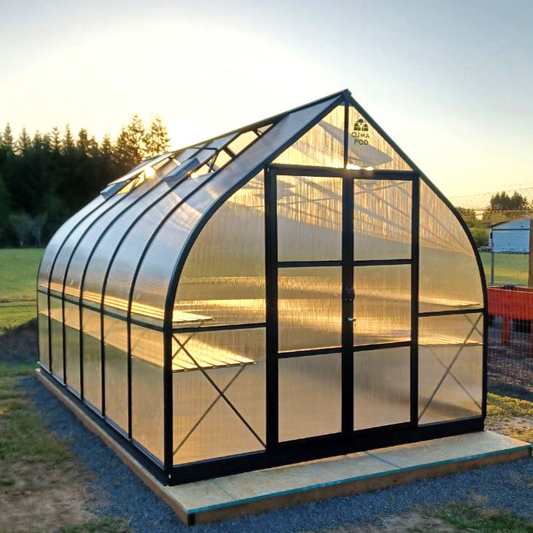
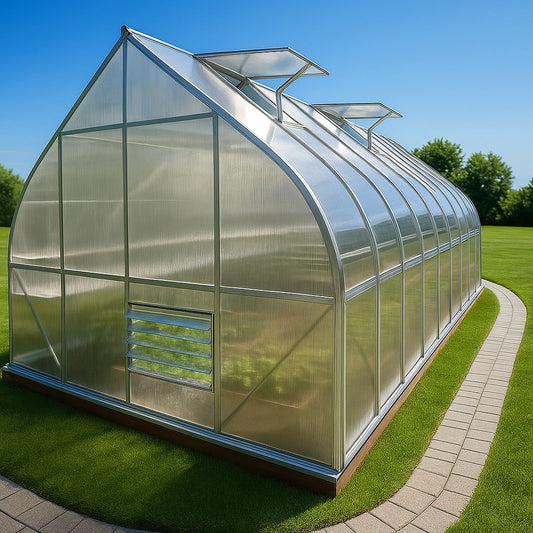
Natural ventilation relies on warm air rising and escaping through roof vents while cooler outside air enters through lower side vents or open doors. Because hot air naturally rises, roof vents are particularly effective at releasing trapped heat.
The greater the vertical distance between incoming and outgoing air, the more efficiently this natural airflow develops.
Modern hobby greenhouses often include automatic vent openers. These mechanical devices use temperature-sensitive cylinders filled with expanding wax. As temperatures rise, the wax expands and gradually opens roof vents without requiring electricity.
Although simple, these systems can significantly reduce overheating on sunny days when no one is home to manually open vents.

Why Air Movement Matters
Ventilation and air circulation are related but not identical.
Ventilation replaces greenhouse air with fresh outside air. Air circulation keeps the existing air moving throughout the greenhouse.
Without circulation, pockets of hot, stagnant air develop near the roof, behind benches, and among dense foliage. These localized hot spots may be several degrees warmer than the average greenhouse temperature.
Horizontal airflow fans (small fans designed to keep air gently moving throughout the greenhouse) help eliminate these temperature differences. Instead of blowing directly onto plants, they create continuous circular air movement that mixes warm and cool air more evenly.
Good circulation also helps leaves dry more quickly after watering, reducing conditions that favor many fungal diseases.
Coming Up Next
In the next part of this guide, we'll cover powered cooling systems, evaporative cooling, watering strategies during heat waves, humidity management, crop-specific recommendations, regional differences across the United States, troubleshooting common summer problems, and practical checklists for keeping your greenhouse productive even during extended periods of extreme heat.
When Passive Cooling Isn't Enough
Passive cooling methods can reduce greenhouse temperatures dramatically, but they have limits. During extended heat waves, especially in the southern United States or inland regions where summer temperatures regularly exceed 95°F (35°C), additional cooling may be necessary.
The goal isn't necessarily to make the greenhouse feel air-conditioned. Instead, the objective is to lower peak temperatures enough that plants can continue growing without prolonged heat stress.
Before investing in equipment, remember that every powered cooling system works best when paired with good ventilation and appropriate shading. Fans alone cannot compensate for a greenhouse that traps excessive solar heat.

Using Exhaust Fans Effectively
An exhaust fan pulls hot air out of the greenhouse while drawing cooler outdoor air through intake vents or open doors. This constant air exchange is often the most effective mechanical cooling solution for hobby and small-scale greenhouses.
The fan should be positioned near the highest point of one end wall, where the hottest air naturally collects. Fresh air should enter from the opposite end of the greenhouse, creating airflow across the entire growing space rather than short-circuiting near the fan.
Simply opening the greenhouse door while running an exhaust fan may improve airflow, but dedicated intake vents usually distribute fresh air more evenly.
Many growers connect exhaust fans to thermostats. A greenhouse thermostat automatically turns the fan on when the indoor temperature reaches a preset level, helping maintain more consistent growing conditions without constant monitoring.
Understanding Evaporative Cooling
Evaporative cooling uses the natural process of water evaporation to lower air temperature. As water changes from liquid to vapor, it absorbs heat from the surrounding air.
Commercial greenhouses often use evaporative cooling pads combined with exhaust fans. Outside air is pulled through wet pads before entering the greenhouse, reducing its temperature before it reaches the plants.
This system can be highly effective in hot, dry climates where the air has a low relative humidity - the percentage of moisture already present in the air compared to the maximum it can hold.
However, evaporative cooling becomes much less effective when outdoor humidity is already high.
Gardeners in states such as Arizona, Nevada, Utah, and parts of inland California often see excellent results. In contrast, growers in Florida, the Gulf Coast, or the humid Southeast may experience only modest cooling because the air is already holding large amounts of moisture.
Adjust Watering for Hot Weather But Don't Overwater
One of the most common reactions to extreme heat is increasing irrigation. While plants certainly need more water during hot weather, watering strategy is just as important as watering frequency.
Container-grown plants often dry out much faster than plants growing directly in the ground because their root systems are surrounded by a relatively small volume of soil.
Rather than watering on a fixed schedule, check soil moisture several inches below the surface. The top layer may appear dry while the root zone remains adequately moist.
Early morning is generally the best time to water. Plants begin the day with sufficient moisture, and any water splashed onto foliage has time to dry before evening.
Late afternoon watering can also be helpful during prolonged heat waves if plants show signs of genuine moisture stress.
Avoid relying on midday watering as your primary cooling strategy. While it may temporarily revive wilted plants, much of the water can evaporate quickly under intense sunlight.

Managing Humidity Along with Temperature
Cooling and humidity are closely connected inside a greenhouse.
Humidity refers to the amount of water vapor suspended in the air. While moderate humidity reduces plant water loss, excessively high humidity creates conditions that favor fungal diseases such as powdery mildew and gray mold.
Ironically, cooling methods that add moisture to the air may increase disease pressure if ventilation is poor.
Maintaining healthy humidity is therefore a balancing act.
Good air exchange helps remove excess moisture while keeping temperatures under control. Circulation fans prevent damp pockets of stagnant air from forming within dense plant canopies.
Spacing plants appropriately also improves airflow between leaves, reducing disease risk while helping cooling systems work more effectively.
Different Crops Have Different Heat Limits
Not every greenhouse crop responds to summer temperatures in the same way.
Understanding these differences helps growers prioritize cooling efforts where they'll have the greatest impact.
Tomatoes
Tomatoes are relatively heat tolerant, but pollen becomes less viable during prolonged periods of very high temperatures. Plants may continue flowering while producing fewer fruits.
Peppers
Peppers generally tolerate heat better than tomatoes, although prolonged extreme temperatures can still reduce fruit set and increase blossom drop.
Cucumbers
Cucumbers grow rapidly in warm weather but require consistent moisture. Heat combined with drought stress often leads to bitter fruit and reduced yields.
Lettuce and Leafy Greens
Cool-season greens are among the first crops to struggle during summer. High temperatures encourage bolting, the rapid production of flowering stalks that signals the end of leafy growth and often makes leaves bitter.
Herbs
Many Mediterranean herbs, including rosemary, thyme, oregano, and sage, tolerate heat remarkably well. Softer herbs such as cilantro may decline much sooner during hot weather.

Cooling Strategies Across Different U.S. Climates
Greenhouse cooling recommendations vary considerably depending on regional climate.
Pacific Northwest
Summer temperatures are often moderate, but occasional heat waves can arrive suddenly. Temporary shading and excellent ventilation are usually sufficient for many hobby greenhouses.
Northeast and Upper Midwest
Gardeners frequently experience alternating cool and hot periods. Flexible systems that allow rapid adjustment (removable shade cloth and automatic vents) offer excellent versatility.
Southeast
Heat and humidity remain persistent challenges. Strong ventilation, circulation fans, and disease prevention become especially important.
Southwest
Dry desert climates create intense solar heating. Shade cloth, evaporative cooling, and careful irrigation often work together to maintain acceptable growing conditions.
Preparing Before the Heat Wave Arrives
Successful greenhouse cooling begins before temperatures become extreme.
As summer approaches:
- Inspect automatic roof vent openers.
- Clean fan blades and ventilation openings.
- Repair damaged shade cloth.
- Check irrigation systems for uniform coverage.
- Remove unnecessary clutter that blocks airflow.
- Position thermometers where they accurately represent plant-level temperatures.
- Test thermostats before the hottest part of the season.
These routine maintenance tasks often prevent emergency situations later in the summer.
Troubleshooting Common Summer Greenhouse Problems
Even with a well-planned cooling strategy, summer weather can present unexpected challenges. Knowing how to identify the cause of a problem helps you respond effectively instead of making changes that may worsen conditions.
Plants Wilt Every Afternoon
If plants recover by evening and the soil remains adequately moist, temporary wilting may simply indicate that water is evaporating from the leaves faster than the roots can replace it. This is common during very hot afternoons.
If plants remain wilted overnight, however, investigate further. Possible causes include underwatering, root damage, diseases affecting the root system, or prolonged exposure to excessive heat.
Flowers Drop Without Producing Fruit
Tomatoes, peppers, and some other fruiting vegetables may shed blossoms when temperatures remain too high for successful pollination. Improving ventilation, reducing afternoon temperatures with shade cloth, and maintaining consistent soil moisture often improve fruit set once temperatures moderate.
Leaf Edges Turn Brown
Brown, crispy leaf margins can result from excessive heat, inconsistent watering, fertilizer salt buildup, or combinations of these factors. Examine the entire growing environment rather than assuming heat alone is responsible.
Humidity Remains High Despite Open Vents
On humid summer days, outside air may already contain large amounts of moisture. Additional air circulation with horizontal airflow fans helps reduce stagnant pockets around foliage, even when overall humidity cannot be lowered substantially.

A Practical Greenhouse Cooling Checklist
During periods of sustained hot weather, a simple daily routine can help prevent small issues from becoming major setbacks.
- Open roof and side vents early in the morning.
- Confirm that automatic vent openers are functioning properly.
- Use shade cloth before temperatures reach their afternoon peak.
- Check greenhouse thermometers at plant height rather than near the roof.
- Monitor soil moisture instead of watering on a fixed schedule.
- Keep circulation fans operating to eliminate stagnant air.
- Harvest mature vegetables regularly to reduce plant stress.
- Remove damaged or diseased foliage that restricts airflow.
- Inspect plants daily for signs of heat stress or disease.
- Close the greenhouse only after evening temperatures begin to fall, if appropriate for your local climate.
Frequently Asked Questions
Should a greenhouse stay open all day during summer?
In many climates, roof vents and side vents remain open throughout warm summer days to maximize airflow. However, local weather conditions matter. Strong storms, high winds, or sudden temperature changes may require temporary adjustments.
Can plants receive too much ventilation?
Generally, fresh air benefits greenhouse crops during hot weather. Problems are more likely to occur when strong fans create continuous drying winds directly on young seedlings or delicate transplants. Gentle, even airflow is usually preferable.
Is misting plants an effective cooling method?
Light misting can temporarily cool leaf surfaces, but it also raises humidity. In humid climates, repeated misting may increase the risk of fungal diseases. It should not replace proper ventilation or shading.
Does greenhouse color affect summer temperatures?
The glazing material, shade level, ventilation design, and greenhouse orientation generally have a much greater influence on summer temperatures than the frame color itself.
Can I grow vegetables in a greenhouse all summer?
Yes, but success depends on choosing crops suited to warm conditions and managing temperature effectively. Some gardeners also use their greenhouse differently during the hottest months, growing heat-loving crops while moving cool-season vegetables outdoors until temperatures moderate.
Final Thoughts
Hot weather doesn't have to bring greenhouse production to a halt. With thoughtful planning and a combination of passive and active cooling strategies, most gardeners can maintain productive growing conditions throughout much of the summer.
The most successful growers don't rely on a single solution. Instead, they combine shading, ventilation, air circulation, careful irrigation, and regular observation to create an environment where plants experience fewer extremes.
Perhaps the most important lesson is to watch your plants as closely as you watch the thermometer. Healthy foliage, steady growth, and reliable harvests provide the clearest evidence that your cooling strategy is working.
As every growing season brings different weather patterns, continue refining your approach. Small adjustments made at the right time often produce better results than expensive equipment installed after plants have already suffered from heat stress.