
Greenhouse Ventilation in Spring: How to Create Healthy Airflow for Stronger Plants and Bigger Harvests
Spring is when your greenhouse has the greatest potential and the greatest risk. As longer days and warmer sunshine wake plants from winter dormancy, temperatures and humidity inside the greenhouse can change dramatically in just a few hours. Without proper ventilation, healthy seedlings can quickly become stressed, fungal diseases gain a foothold, and pollination may suffer long before you notice a problem. The good news is that creating healthy airflow doesn't require complicated equipment or constant monitoring. In this guide, you'll learn how spring ventilation works, when to open your greenhouse, how to balance temperature and humidity, and the practical strategies experienced growers use to build stronger plants and enjoy larger, healthier harvests all season long.
Why Spring Ventilation Matters
After months of cold weather, spring feels like a welcome change for gardeners. Seedlings grow quickly, sunlight becomes stronger, and many warm-season crops begin their most active period of development. Inside a greenhouse, however, these same favorable conditions can rapidly create an environment that is too warm, too humid, and surprisingly stressful for plants.
Many first-time greenhouse owners assume that spring temperatures are still mild enough to keep the structure mostly closed. In reality, even when outdoor air temperatures are only 60–65°F (16–18°C), direct sunshine can raise the temperature inside a closed greenhouse well above 90°F (32°C) within an hour.
This sudden heat buildup is known as the greenhouse effect — the process by which sunlight enters through transparent panels, warms interior surfaces, and becomes trapped as heat. While this effect makes early-season growing possible, it also means temperatures can quickly exceed what vegetables, herbs, flowers, and seedlings can safely tolerate.
Without adequate ventilation, plants may experience:
- heat stress that slows growth,
- reduced pollination,
- poor fruit development,
- high humidity that encourages fungal diseases,
- weak stems caused by stagnant air,
- greater pest pressure.
Proper ventilation does much more than cool the greenhouse. It continuously refreshes the growing environment by replacing warm, moisture-laden air with cooler, drier outdoor air. This simple exchange supports nearly every aspect of healthy plant development.
Experienced growers often describe ventilation as the greenhouse's invisible irrigation system because good airflow influences how efficiently plants use water, nutrients, and sunlight.

The Science Behind Greenhouse Airflow
Understanding why ventilation works makes it much easier to manage effectively.
Plants constantly exchange gases with their environment through microscopic openings in their leaves called stomata. These tiny pores allow carbon dioxide to enter for photosynthesis while releasing oxygen and water vapor.
Photosynthesis is the process plants use to convert sunlight, water, and carbon dioxide into sugars that fuel growth.
When greenhouse air becomes stagnant, several problems develop simultaneously.
Humidity rises because water released through transpiration (the natural process by which plants lose moisture through their leaves) remains trapped inside the greenhouse. High humidity slows additional transpiration, reducing the movement of water and nutrients from the roots to growing tissues.
At the same time, carbon dioxide levels near dense foliage may decline during daylight hours. Since carbon dioxide is one of the raw materials required for photosynthesis, depleted air can limit growth even when plenty of sunlight is available.
Fresh airflow restores the balance by:
- bringing in fresh carbon dioxide,
- removing excess humidity,
- equalizing temperatures,
- preventing pockets of stagnant air,
- reducing condensation on leaves.
Moving air also encourages plants to develop stronger stems. Just as outdoor breezes help garden plants become sturdier, gentle greenhouse air movement stimulates structural strength, making plants better able to support flowers and fruit later in the season.
Benefits of Proper Ventilation
Good greenhouse ventilation affects nearly every stage of plant growth. Some benefits are immediately visible, while others become apparent only later in the season.
Perhaps the greatest advantage is disease prevention. Many common fungal pathogens including powdery mildew, gray mold (Botrytis), and leaf mold thrive when moisture remains on leaves for extended periods. By reducing humidity and allowing foliage to dry more quickly, ventilation creates conditions that are far less favorable for disease development.
Pollination also improves significantly. Tomatoes, peppers, eggplants, and many flowering crops rely on slight air movement to help transfer pollen. Although some gardeners manually shake plants or use electric pollinators, natural airflow provides continuous assistance throughout the day.
Ventilation also improves temperature consistency.
Without airflow, different parts of the greenhouse may vary by 15°F (8°C) or more. The roof can become dangerously hot while lower areas remain relatively cool. Plants growing near south-facing walls often experience much greater heat stress than those on the opposite side.
Proper ventilation minimizes these temperature differences, creating a more uniform growing environment.
Additional benefits include:
- healthier root systems through improved transpiration,
- better nutrient uptake,
- stronger flowering,
- improved fruit set,
- reduced insect pressure from pests that favor stagnant, humid conditions,
- less condensation dripping onto leaves.
Natural vs. Mechanical Ventilation
There is no single "best" ventilation system for every greenhouse. The right solution depends on the size of the structure, local climate, the crops being grown, and how much time you can devote to monitoring conditions throughout the day.
Most home greenhouses rely primarily on natural ventilation, which uses roof vents, side vents, windows, and doors to exchange air without powered equipment. Larger commercial operations often supplement or replace natural ventilation with mechanical ventilation, using exhaust fans (ClimaPod Solar-powered Fan) and circulation fans to maintain consistent environmental conditions.
For many backyard growers, the most effective strategy combines both approaches. Natural ventilation handles most of the daily air exchange, while fans improve circulation during calm weather or periods of high humidity.
Natural Ventilation
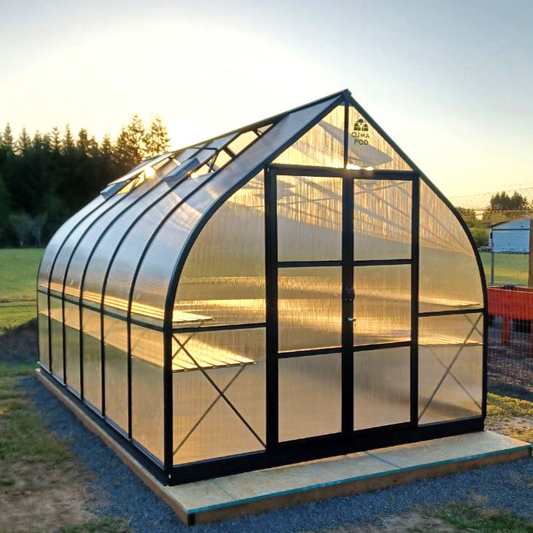
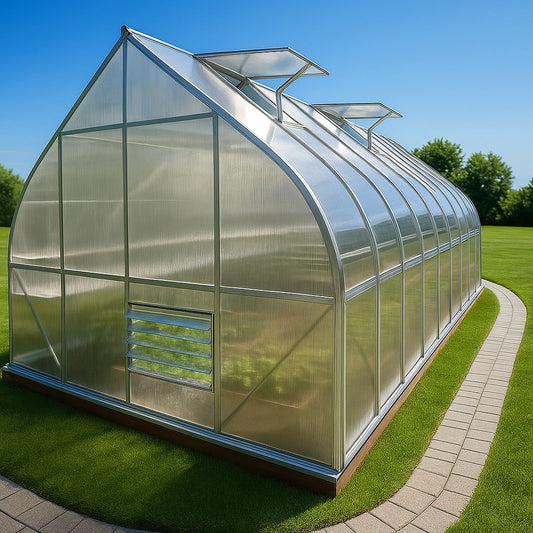
Natural ventilation works because warm air naturally rises. As the greenhouse heats up, hot air collects near the roof. Opening roof vents allows this warm air to escape, while cooler outside air enters through lower side vents, windows, or open doors.
This continuous movement is known as the stack effect. It relies on differences in temperature and air pressure rather than electricity.
The stack effect works best when both upper and lower openings are available. Simply opening a single door often provides much less air exchange than gardeners expect.

Advantages of natural ventilation include:
- low operating cost,
- no electricity required,
- quiet operation,
- minimal maintenance,
- excellent airflow on breezy spring days.
However, natural ventilation has limitations. On still, humid days with little wind, air movement may be insufficient to remove moisture effectively. It also requires regular attention unless automatic vent openers are installed.
Mechanical Ventilation
Mechanical systems use electric equipment to move air regardless of outdoor wind conditions.
The two most common components are:
- Exhaust fans, which remove warm, humid air from the greenhouse.
- Circulation fans, which keep air moving within the greenhouse without exchanging it with the outside.
These two fan types serve different purposes and should not be confused.
An exhaust fan changes the greenhouse environment by replacing indoor air with outdoor air.
A circulation fan simply eliminates stagnant pockets of air, helping maintain even temperatures and humidity throughout the structure.
Even relatively small greenhouses benefit from one or two circulation fans positioned to create gentle, continuous airflow above the crop canopy rather than directly at individual plants.
Automatic Vent Openers
One of the most useful upgrades for hobby greenhouse owners is an automatic roof vent opener.
Most models contain a temperature-sensitive cylinder filled with wax. As temperatures rise, the wax expands and gradually opens the vent. When temperatures cool, the wax contracts, allowing the vent to close.
Because these systems operate without electricity, they continue functioning during power outages and require very little maintenance.
Automatic openers are particularly valuable during spring, when sunny mornings can quickly become unexpectedly warm while many gardeners are away at work.
Although automatic vents cannot replace thoughtful greenhouse management, they greatly reduce the risk of dangerous temperature spikes.
When Should You Open Your Greenhouse?
Timing is just as important as the ventilation method itself.
Many growers wait until the greenhouse already feels hot before opening vents. By that point, temperatures may have exceeded the ideal range for several hours.
Instead, experienced greenhouse growers ventilate proactively.
As sunlight increases in the morning, greenhouse temperatures rise long before the outdoor air feels particularly warm. Opening vents early allows heat to escape gradually instead of building to stressful levels.
For many spring days, this means opening vents during mid-morning rather than waiting until noon.
The exact timing depends on:
- outside temperature,
- sun intensity,
- cloud cover,
- wind speed,
- greenhouse size,
- type of glazing material,
- the crops being grown.
Small hobby greenhouses often heat much faster than large commercial structures because they contain less air volume.

Ideal Spring Temperature Ranges
Most vegetables perform best when daytime greenhouse temperatures remain between 65°F and 80°F (18–27°C). Some warm-season crops tolerate slightly higher temperatures, but prolonged exposure above 90°F (32°C) can reduce pollination and slow growth.
Nighttime temperatures vary by crop, but spring ventilation should always balance fresh air with protection from chilling.
Rather than chasing an exact temperature, focus on avoiding sudden extremes.
Plants generally tolerate gradual warming much better than rapid temperature spikes.
Should Greenhouse Doors Stay Open All Day?
Not necessarily.
Leaving doors wide open all day may seem like the simplest solution, but it can create uneven airflow and expose plants to sudden wind gusts, pollen, insects, or unexpectedly cool evening temperatures.
Instead, think of greenhouse ventilation as controlled air exchange rather than maximum air exposure.
Adjust vents gradually as conditions change throughout the day.
Late afternoon often provides a good opportunity to reduce ventilation before outdoor temperatures begin falling. Closing roof vents too late can allow valuable heat accumulated during the day to escape overnight.
Monitoring Makes the Difference
One of the biggest improvements any greenhouse owner can make is installing a digital thermometer that records both minimum and maximum temperatures.
Many gardeners are surprised to discover that greenhouse temperatures frequently reach levels far higher than expected while they are away.
A combined thermometer and hygrometer (a device that measures both temperature and relative humidity) provides an even clearer picture of daily greenhouse conditions.
Keeping simple records for several weeks helps identify patterns unique to your greenhouse, allowing you to anticipate ventilation needs instead of reacting after problems appear.
Ventilation also protects the greenhouse itself. Persistent condensation encourages algae growth, corrosion of metal components, mold on wooden structures, and premature deterioration of glazing materials. Keeping humidity under control helps extend the lifespan of the greenhouse while reducing maintenance.
As spring progresses and daytime temperatures continue to rise, simply opening a door for a few hours often becomes insufficient. The next step is understanding the different ventilation systems available and when each one works best.
Managing Humidity During Spring
Temperature is often the first thing greenhouse growers notice, but humidity can have an even greater influence on plant health. Spring conditions create the perfect environment for moisture to accumulate inside a greenhouse. Cool nights, warming days, frequent rain, and rapidly growing plants all contribute to rising humidity levels.
Relative humidity is the amount of water vapor the air contains compared to the maximum it could hold at the same temperature. Warm air can hold more moisture than cool air, which is why humidity often rises sharply overnight as temperatures drop.
High humidity isn't always harmful. Many young seedlings appreciate moderately humid conditions because they lose water more slowly. Problems begin when humidity remains consistently high, especially above 85%, for extended periods. Under these conditions, leaves stay wet longer, fungal spores germinate more easily, and diseases spread rapidly.
The goal is not perfectly dry air but a balanced environment where plants can transpire efficiently while foliage dries within a reasonable time after watering.

Why Condensation Matters
Condensation occurs when warm, moisture-laden air contacts a cooler surface, causing water droplets to form. In spring, greenhouse glazing often cools overnight while the air inside remains relatively warm and humid.
Those droplets may seem harmless, but they create several problems.
- Water dripping onto foliage keeps leaves wet for hours.
- Persistent moisture encourages fungal diseases.
- Wet structural components may develop algae or mold.
- Repeated condensation can reduce light transmission through glazing materials.
The best way to reduce condensation is not by heating more, but by exchanging humid indoor air with drier outdoor air before moisture reaches its dew point—the temperature at which water vapor condenses into liquid.
Watering and Ventilation Work Together
Ventilation cannot compensate for poor watering practices.
Many gardeners water late in the day because it fits their schedule. Unfortunately, evening watering raises humidity just as outside temperatures begin falling, allowing moisture to remain trapped overnight.
Whenever possible, water in the morning. Plants have the entire day to absorb moisture while ventilation removes excess humidity before nightfall.
This simple scheduling adjustment often reduces disease pressure more effectively than fungicide applications.
Different Crops Have Different Ventilation Needs
Although all greenhouse crops benefit from fresh air, they do not all respond to temperature and humidity in the same way. Understanding these differences helps you fine-tune ventilation instead of treating every plant alike.
Tomatoes
Tomatoes are among the most commonly grown greenhouse vegetables, but they are also highly sensitive to poor ventilation during flowering.
Excessive heat can reduce pollen viability, while stagnant, humid air limits pollen movement between flowers. Even healthy plants may produce fewer fruits if daytime temperatures remain too high.
Tomatoes also become more susceptible to fungal diseases when foliage stays damp.
Good ventilation encourages stronger stems, healthier flowers, and more reliable fruit set throughout spring.

Cucumbers
Cucumbers appreciate warmth more than tomatoes, but they still require steady air movement.
High humidity alone rarely harms cucumber plants. The greater concern is the combination of warmth, humidity, and poor air circulation, which favors diseases such as powdery mildew.
Because cucumber vines produce dense foliage, removing a few older leaves near the base improves airflow without significantly reducing productivity.
Peppers and Eggplants
Peppers and eggplants generally tolerate warmer greenhouse conditions than tomatoes, but flowering and fruit production still decline if temperatures remain excessively high.
Moderate ventilation also helps strengthen stems that will later support heavy fruit.
Lettuce and Cool-Season Greens
Lettuce, spinach, arugula, and many leafy greens prefer cooler conditions.
Without adequate spring ventilation, these crops may bolt (a process in which plants rapidly produce flowers and seeds instead of tender leaves). Bolting often results in bitter flavor and reduced harvest quality.
For leafy crops, preventing overheating is usually more important than maximizing warmth.
Seedlings
Young seedlings require special attention.
While they benefit from gentle airflow that encourages sturdy stems, they are also more vulnerable to rapid drying and cold drafts.
Instead of placing trays directly in front of fans or open doors, aim for gentle air circulation throughout the greenhouse.
This subtle movement helps prevent damping-off, a group of soilborne fungal diseases that causes young seedlings to collapse at the soil line before they become established.
Adjusting Ventilation for Different U.S. Climates
No ventilation schedule works equally well across the United States. Local weather patterns, humidity, elevation, and seasonal temperature swings all influence how quickly greenhouse conditions change.
Pacific Northwest
Gardeners in Washington, Oregon, and coastal northern California often experience cool, damp springs. Here, controlling humidity is usually a greater challenge than controlling heat.
Even on cool days, short periods of ventilation help remove moisture and reduce disease risk.
Southeast
Across much of the Southeast, warm temperatures combine with naturally high humidity.
Mechanical air circulation often becomes valuable earlier in spring because natural ventilation alone may not remove enough moisture during calm weather.
Midwest and Northeast
Spring weather in these regions can change dramatically within a few hours.
Gardeners should expect to adjust vents daily (and sometimes several times in one day) as cold fronts alternate with bright sunshine.
Southwest
Dry air changes the ventilation equation.
While fungal diseases may be less common, rapid moisture loss can stress plants if ventilation becomes excessive during windy conditions. Monitoring soil moisture becomes especially important because increased airflow accelerates evaporation.
Advanced Spring Airflow Strategies
Once you've mastered the basics of greenhouse ventilation, small adjustments can make an even bigger difference in plant performance. Professional growers rarely rely on temperature alone. Instead, they consider how light intensity, humidity, crop growth stage, and daily weather patterns interact throughout the season.
Create Continuous Air Movement
The objective isn't simply to replace warm air with cooler air. Ideally, fresh air should move throughout the greenhouse so that every plant experiences similar growing conditions.
Dense foliage, benches, shelving, and tightly spaced containers can all create "dead zones" where humid air becomes trapped. These stagnant pockets often become the first places where fungal diseases appear.
Walk through your greenhouse occasionally and notice how the air feels at different locations. If one corner consistently feels warmer or more humid than the rest, improving circulation in that area may significantly reduce future problems.

Avoid Large Temperature Swings
Plants generally cope well with gradual changes in temperature but can become stressed by rapid fluctuations.
For example, opening every vent and door on a cool, windy morning may cause temperatures to drop too quickly, particularly around tender seedlings. Likewise, leaving the greenhouse completely closed until midday often allows temperatures to climb to stressful levels before cooling begins.
Small, gradual adjustments throughout the day create a far more stable growing environment than dramatic changes made only once or twice.
Don't Forget Plant Spacing
Ventilation becomes less effective as plants grow larger and foliage becomes denser.
One of the easiest ways to improve airflow requires no additional equipment at all: proper spacing.
Allow enough room between mature plants for air to circulate naturally. As crops develop, remove overcrowded leaves when appropriate and avoid letting vines completely block walkways or vents.
Good airflow begins with thoughtful greenhouse layout as much as with fans and vents.
Monitor Conditions Instead of Guessing
Many experienced growers eventually discover that their greenhouse behaves differently than expected.
A simple digital thermometer/hygrometer placed at plant height often reveals that temperatures near the crop differ significantly from those measured near the roof or doorway.
If possible, record:
- morning temperature,
- afternoon maximum temperature,
- overnight minimum temperature,
- relative humidity during the morning and evening.
After several weeks, you'll begin recognizing patterns that allow you to anticipate problems before they affect your plants.
Frequently Asked Questions
Can a greenhouse have too much ventilation?
Yes. Excessive ventilation can lower temperatures too quickly, increase water loss from both plants and soil, and expose tender seedlings to cold drafts. The goal is balanced, controlled airflow rather than constant maximum ventilation.
Should greenhouse vents stay open at night?
In most regions during spring, vents should be partially or fully closed before nighttime temperatures begin falling. However, exceptionally warm nights with high humidity may benefit from limited ventilation, depending on the crop and local weather.
Do I need fans in a small backyard greenhouse?
Not always. A well-designed greenhouse with roof and side vents often provides sufficient ventilation through natural air movement. Small circulation fans become valuable when humidity remains high, wind is limited, or crops are densely planted.
How can I tell if ventilation is inadequate?
Common warning signs include persistent condensation, musty odors, weak stems, fungal diseases, uneven temperatures, slow pollination, and leaves that remain wet for hours after watering.
Is opening the greenhouse door enough?
Usually not. Opening only the main door provides limited air exchange compared with combining roof vents and lower intake openings. Warm air naturally rises, so roof ventilation is generally much more effective at releasing accumulated heat.
Does ventilation reduce pests?
Good airflow cannot eliminate insect pests, but it creates conditions that are less favorable for problems such as whiteflies, aphids, and spider mites while improving overall plant vigor and resilience.
When should automatic vent openers be installed?
Ideally, before spring temperatures begin rising consistently. Automatic systems provide the greatest benefit during unpredictable spring weather when daytime heating can occur rapidly while gardeners are away from home.
Final Thoughts
Successful greenhouse gardening isn't about keeping plants as warm as possible. It's about maintaining an environment where temperature, humidity, fresh air, and light remain in balance.
Spring is the season when that balance changes almost daily. Bright sunshine, cool nights, frequent rain, and rapidly growing plants constantly alter greenhouse conditions. Learning to manage ventilation proactively allows plants to use water more efficiently, absorb nutrients more effectively, resist disease, and produce stronger flowers and healthier harvests.
Whether you rely on simple roof vents or a more sophisticated ventilation system, consistent observation remains your most valuable tool. Every greenhouse develops its own rhythm, influenced by its design, location, crops, and local climate.
As you gain experience, ventilation becomes less about reacting to high temperatures and more about creating a stable growing environment where plants can thrive throughout the season.
- Ventilate early in the day before excessive heat builds up.
- Control humidity as carefully as temperature.
- Use roof vents together with lower openings whenever possible.
- Gentle air circulation strengthens plants and discourages disease.
- Adjust ventilation according to local weather rather than the calendar.
- Monitor greenhouse conditions regularly instead of relying on estimates.