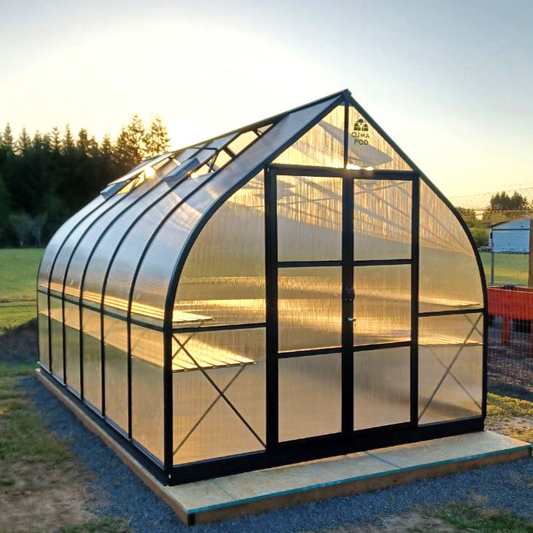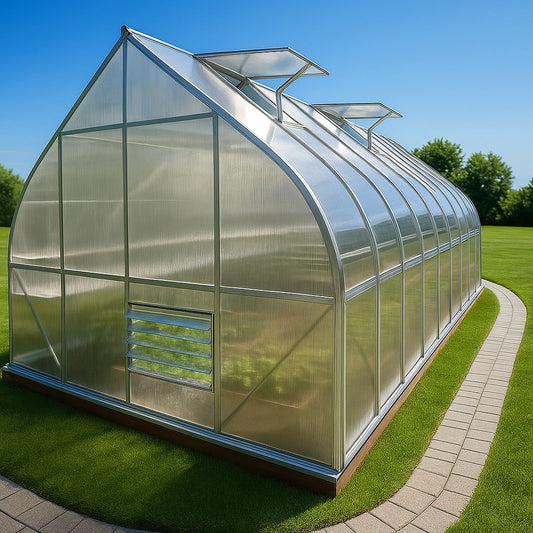

Why Does Greenhouse Soil Dry Unevenly, Even When You Water the Same Amount?
Short Answer
Your greenhouse isn't one climate. It's several small ones stacked next to each other, and they all dry soil at a different speed. A bench near the glazing (the glass or plastic panels that let light in) bakes in more direct sun than a bench six feet away, and a spot near a vent fan loses moisture to moving air faster than a still corner does. Water every pot the exact same amount and you'll still end up with dry edges and soggy middles.
Why It Happens
Light isn't distributed evenly inside a greenhouse. South-facing benches, or anywhere sun tracks directly across the glazing for most of the day, run hotter and dry out faster than shaded rows tucked behind taller plants or structural framing.
Airflow adds another layer. Circulation fans, exhaust vents, and even the gap under a door create moving-air zones that pull moisture out of soil through evaporation, the process by which water at the surface turns to vapor and leaves the pot. Plants sitting in that airflow dry out noticeably faster than plants in a still pocket ten feet away.
Then there's the floor itself. A soil or gravel floor absorbs and releases heat differently than a raised bench does, and that changes how fast root-zone moisture disappears. Pots resting directly on concrete or dark paving often dry faster from the bottom up, since the surface radiates heat back into the container.
Watering systems get blamed less than they should. Drip emitters clog gradually, not all at once, so one or two plants in a row can quietly get less water for weeks before anyone notices. Hand watering has its own blind spot: the surface looks wet after a quick pass, but water hasn't necessarily reached the root zone in every pot, especially larger containers or ones packed with dense root growth.
What To Do
Start by mapping your greenhouse into rough zones: sunny, shaded, near-vent, and still-air. You'll probably already sense which benches dry fastest just from memory, but write it down. Patterns shift with the seasons as the sun angle changes.
Check soil moisture at more than one spot per bench, not just the plant nearest the door. A simple finger test, pushing a finger two inches into the soil, works fine for most home setups. A moisture meter is worth the small cost if you're managing more than a dozen plants, since it removes the guesswork.

Rotate pots and trays periodically if your layout allows it, so no single plant sits in the hottest or windiest spot for the whole season. Group plants with similar water needs together rather than spacing them by size or species alone. That makes it much easier to water accurately by zone instead of averaging across very different conditions.
If you're on drip irrigation, inspect emitters every few weeks. A clog usually shows up first as one wilting plant in an otherwise healthy row, not a system-wide failure. Adding a layer of mulch on exposed soil surfaces also slows evaporation in your hottest zones, buying you a day or two of buffer between waterings.
What To Watch For
- Wilting that appears only in plants near the sunniest glazing or an active vent fan, a sign of a localized dry zone rather than a watering schedule problem.
- Algae or mold building up on soil surfaces in shaded, still-air corners, which usually points to excess moisture retention rather than underwatering.
- One plant in a drip-irrigated row consistently drier than its neighbors, a common early sign of a clogged or misaligned emitter.
- Judging moisture by the top inch of soil alone, especially in cooler months when surface and root-zone moisture can tell two different stories.
- Expect to re-map your zones as the seasons turn. A layout that worked in July, when the sun sits high and vents run constantly, often needs adjusting by October.