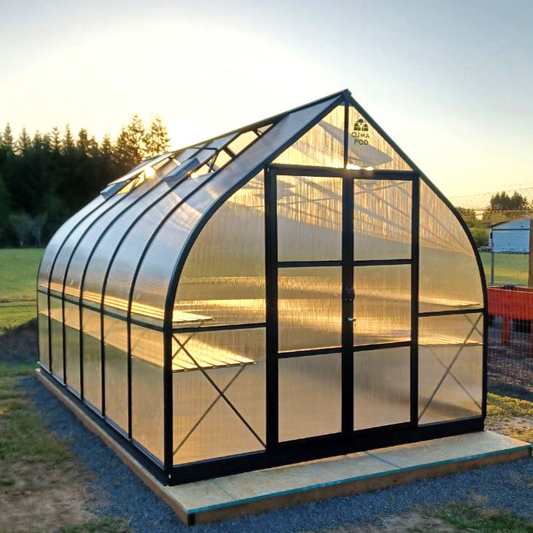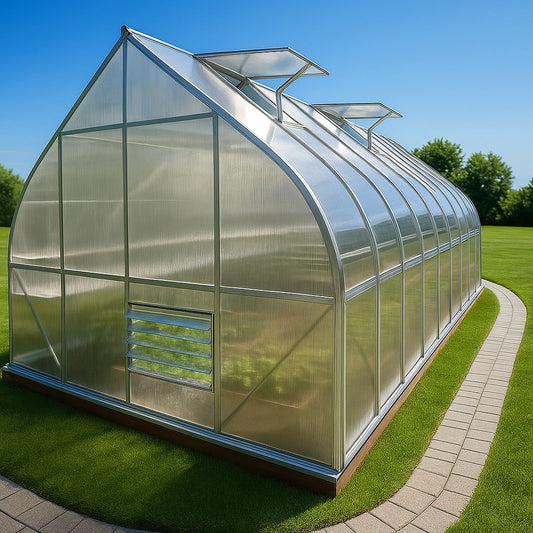

Why Does My Greenhouse Overheat Even on a Mild Day?
You check the thermometer outside and it says 72°F. Nice, easy, sweater-weather kind of day. Then you open the greenhouse door and it hits you like a wall: 95, sometimes 100 degrees inside. Your tomato seedlings are wilting by noon even though nothing about the weather looks extreme.
This isn't a malfunction, and it isn't your imagination. A greenhouse can run 20 to 40 degrees hotter than the air outside it, and on a clear, calm day, that gap gets worse, not better.
Why It Happens
A greenhouse traps solar radiation. Sunlight passes through the glazing (the glass or polycarbonate covering that lets light in), hits the soil, benches, and plant leaves, and turns into heat. That heat radiates back out as infrared energy, and most greenhouse glazing doesn't let infrared pass back through nearly as easily as it let the original sunlight in. So the heat gets in, but it struggles to get back out. That's the greenhouse effect, and it works exactly the same whether the air outside is 55°F or 95°F.
Outdoor temperature only tells you part of the story. Solar intensity matters more. A clear, cloudless 65°F day in April can load a greenhouse with more usable sunlight per square foot than a hazy 85°F day in July, simply because the sun angle and cloud cover are different. Add still air with no wind to carry heat away, and the inside temperature climbs fast, sometimes 20 degrees in under an hour.
Humidity plays a role too. On a mild, humid morning, moisture in the air can actually hold heat close to the plants rather than letting it dissipate, which is part of why a greenhouse that felt comfortable at 9 a.m. can feel like a sauna by 11.
What To Do

Ventilation is the fix, and timing matters more than most people expect. Don't wait for the thermostat to hit 85 or 90 before opening vents. Start venting once the inside temperature crosses about 75°F, since it takes time for airflow to actually bring the interior back down, and by the time you notice the heat spike, the plants have often already been stressed for a while.
A few things that actually move the needle:
- Cross-ventilation. One vent open does almost nothing. Roof vents paired with low side vents or doors create airflow that pulls hot air up and out while pulling cooler air in low.
- Shade cloth. A 30 to 50 percent shade cloth over the roof cuts direct solar load significantly, and it's often the single most effective tool during unpredictable spring and fall stretches when you can't be there to monitor constantly.
- A vent automation kit. These are wax-cylinder or solar-powered openers that react to temperature and open vents automatically, even if you're at work when the sun comes out. Worth it for anyone who can't check the greenhouse midday.
- Thermal mass. Water barrels or dark-colored containers of water absorb excess heat during the day and release it slowly at night, which softens both the daytime spike and the overnight temperature swing.
If you're growing heat-sensitive crops like lettuce or spinach through spring, consider whether they even belong in the greenhouse once daytime highs are reliably mild outside. Sometimes the better move is moving them out from under glass entirely rather than fighting the heat load.
What To Watch For
Wilting during the hottest part of the day isn't automatically a watering problem. Plants under heat stress will sometimes wilt even with plenty of moisture at the roots, simply because they're losing water through the leaves faster than the roots can pull it back in. Check soil moisture before you assume it's dehydration and start dumping extra water on, since overwatering stressed plants brings its own set of problems.
A common mistake is judging greenhouse conditions by the outdoor forecast alone. Get a thermometer inside the structure, ideally one with a min/max memory function, so you can see how hot it actually got at 1 p.m. even if you weren't there to watch it happen.
Realistically, some heat cycling is normal and plants can handle brief spikes without lasting harm. The concern is sustained heat above 90 to 95°F for hours at a time, which is when you'll start seeing blossom drop on tomatoes and peppers, curled or scorched leaf edges, and slowed growth that shows up days later even after temperatures come back down.
Short Answer
Sunlight, not air temperature, is what heats a greenhouse. Clear skies and still air trap solar energy inside the structure regardless of how mild it feels outdoors, which is why a 65°F spring day can push interior temperatures past 100°F. Watch the thermometer inside the greenhouse, not the one on your phone, and start venting before it feels necessary.