
Why Greenhouses Fog Up in Fall (and What Actually Fixes It)
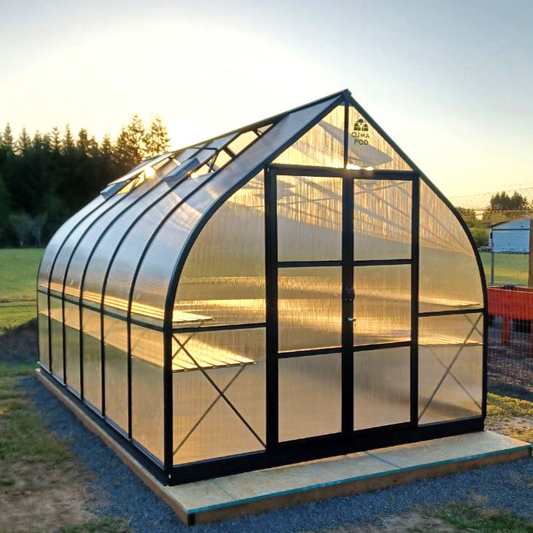
Walk into a greenhouse on a cool October morning and you already know what you'll find before you open the door: rivulets running down the inside of the glazing, leaves sitting under a thin film of moisture, tool handles slick to the touch. Most growers notice this weeks before they understand it. They wipe the panels, shrug, and move on. That's a mistake. Fall condensation isn't cosmetic. Left alone through a few cold nights in a row, it opens the door to fungal problems that can undo a season's worth of growth in under two weeks.
Walk into almost any greenhouse on a cool October morning and you'll see it: rivulets running down the inside of the glazing, leaves sitting under a film of moisture, tool handles slick to the touch. Growers usually notice it before they understand it, and that's fine. What matters more is what you do next, because fall condensation isn't just cosmetic. Left alone, it sets the stage for fungal problems that can undo a whole season's growth in a couple of weeks.
This article walks through why condensation spikes in fall specifically, what it actually costs your plants if you ignore it, and the ventilation, watering, and structural habits that keep a greenhouse dry enough to work in without giving up the heat you're trying to hold onto.
What's Actually Happening When Your Greenhouse Fogs Up
Condensation is simple physics dressed up as a gardening problem. Warm air can hold more water vapor than cold air. When that warm, moist air touches a surface that's colder than the air itself, whether it's a polycarbonate panel, a glass pane, or a metal frame, it cools rapidly right at that surface. Cooled enough, it can no longer hold all its water vapor, and the excess drops out as liquid. That's condensation. The temperature at which this happens is called the dew point, the point where air is fully saturated and any further cooling forces moisture to condense.
Inside a greenhouse, plants are constantly adding water vapor to the air through transpiration (the process by which plants release water vapor from their leaves, similar to sweating). Add in wet soil, standing water from watering cans, and simple respiration from soil microbes, and greenhouse air stays humid almost by default. During the day, sunlight keeps interior surfaces warmer than the air's dew point, so the moisture mostly stays as vapor. The trouble starts once the sun goes down.
Why Fall Condensation Is Worse Than Summer's
Summer greenhouses get humid too, but the swings are gentler. Fall changes the math in three ways at once.
First, nights get colder faster than days do. Glazing and frame surfaces lose heat quickly after sunset, especially on clear nights when there's no cloud cover to trap radiant heat near the ground. Clear-sky nights are actually the worst offenders here, because heat escapes upward with nothing to bounce it back down. Second, the days are shorter, so there's less time for surfaces to warm back up and re-evaporate whatever condensed overnight. Third, most growers are still watering and irrigating on a summer schedule out of habit, pumping in the same amount of moisture even though evaporation and plant uptake have both slowed down as growth pace drops with the light.
The result is a greenhouse that behaves like a closed cooler overnight: plenty of moisture going in, not enough heat or airflow to move it back out.
What Wet Greenhouse Air Actually Costs You
A little morning fog isn't a crisis on its own. Sustained high humidity, on the other hand, changes the conditions your plants are living in every day, and not for the better.
- Fungal disease pressure. Botrytis (gray mold), powdery mildew, and various leaf-spot fungi all thrive when foliage stays wet for extended stretches. Many fungal spores need free water on the leaf surface to germinate; a greenhouse that stays damp from midnight to mid-morning gives them exactly that window.
- Slower drying, slower growth. Plants sitting in saturated air struggle to transpire efficiently, and transpiration is part of how they pull nutrients up from the roots. Chronic high humidity can leave plants looking stalled even when watering and feeding are both on point.
- Structural wear. Constant condensation drips onto wood benches, metal hardware, and irrigation lines, accelerating rust, rot, and mildew on the structure itself, not just the plants.
- Wasted heat. Every gallon of water that evaporates and re-condenses is carrying heat energy with it. In a greenhouse you're actively heating, that's an efficiency loss you're paying for.
Ventilation: The First Line of Defense
If there's one lever that does more work than any other, it's airflow. Moving air doesn't just dry things out; it also keeps interior surface temperatures closer to the air temperature, which narrows the gap that causes condensation in the first place.
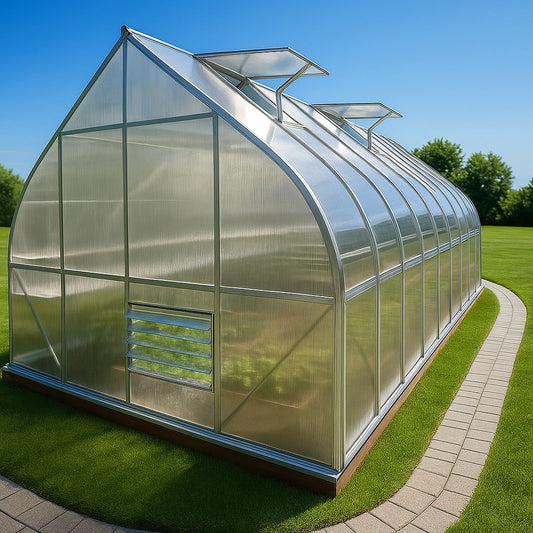
Ridge vents and roof vents are the most efficient option where you have them, because warm, moist air naturally rises and exits through the top of the structure, pulling cooler, drier air in through lower vents or doors. This passive stack effect works even without power, though it slows down considerably on still, windless nights, which happen to be exactly the nights condensation is worst.
For growers without powered ventilation, cracking vents or doors slightly overnight, even just a few inches, often makes a bigger difference than people expect. The goal isn't to cool the greenhouse down to outdoor temperature; it's to keep a trickle of exchange going so humid air doesn't just sit and stagnate against cold glazing.

Powered Options Worth Considering
Circulation fans (the kind that just move air around inside the space, rather than exhausting it outside) are one of the most cost-effective upgrades for fall humidity control. Running a fan on a low, continuous setting keeps air moving across leaf surfaces and along the glazing, which discourages both condensation and the still, damp microclimates fungi prefer. For larger structures, a timer-controlled exhaust fan paired with an intake vent can automate the overnight exchange so you're not relying on remembering to crack a door before bed.
Balancing Humidity Without Losing Your Heat
Ventilation solves airflow, but fall growers are also managing a genuine trade-off: every bit of venting is also a bit of heat loss. This is where the goal shifts from eliminating humidity entirely (which isn't realistic or even desirable for most crops) to keeping it in a workable range.
Most greenhouse crops do fine in the 50 to 70 percent relative humidity range. Below that, plants can lose water faster than roots can replace it, especially in bright conditions. Above roughly 85 percent for extended periods, disease risk climbs sharply. A basic hygrometer (a humidity gauge, often combined with a thermometer) placed at plant height, not up near the roof where readings skew, is one of the cheapest and most useful tools a fall greenhouse grower can own.
Horticultural heaters with built-in thermostats can help by warming interior air just enough to keep it above the dew point of nearby surfaces, which prevents condensation from forming even when humidity stays relatively high. This uses less energy than it sounds like, because you're not trying to heat the whole structure aggressively, just nudging surface temperatures a few degrees above the point where moisture would drop out.
Watering Habits That Cut Condensation
How and when you water has more influence on fall humidity than most growers give it credit for.
Watering early in the day, rather than in late afternoon or evening, gives excess moisture hours to evaporate and vent out before temperatures drop overnight. Water applied at dusk is essentially guaranteed to still be sitting in the air, or on leaves, when the coldest part of the night arrives.
Drip irrigation and soaker hoses also help simply by keeping water at soil level instead of on foliage. Overhead watering, whether from a hose or sprinkler system, wets leaf surfaces directly, and wet leaves are slower to dry in the shorter, cooler days of fall than they would be in July. If you're still hand-watering with a can or wand, aim for the base of the plant and try to avoid soaking the canopy when you can.

Glazing, Insulation, and Structural Fixes
Ventilation and watering address the moisture side of the equation. The other half is the temperature gap between your air and your greenhouse's interior surfaces, and that's largely a matter of materials and structure.
Single-layer glazing, whether glass or thin polyethylene film, loses heat quickly and stays cold to the touch overnight, which makes it a condensation magnet. Double-wall polycarbonate panels or double-layer inflated poly film hold an insulating air pocket between layers, keeping the interior-facing surface noticeably warmer and closer to the dew point threshold where moisture stops dropping out.
Thermal screens (fabric or film curtains deployed at night to trap heat below the roofline) are a middle-ground option for growers who don't want to replace glazing outright. They won't eliminate condensation, but they reduce the surface area of cold glazing exposed to warm interior air, which cuts down on how much moisture actually condenses.
For growers working with hoop houses or low tunnels rather than rigid structures, double-layer film with an inflation fan running between the layers offers a similar insulating benefit at a lower cost than switching to polycarbonate, though it does add a small ongoing electricity draw for the fan itself.

A Simple Fall Routine That Actually Works
None of this requires expensive equipment to get right. Most of it comes down to a short, consistent routine.
- Water early in the day, and scale the volume down as growth slows.
- Check a hygrometer at plant height each morning and evening; note the trend, not just the number.
- Crack vents or doors slightly overnight whenever the daytime high was significantly above the forecast low.
- Run a circulation fan continuously, even at low speed, through the fall and winter months.
- Wipe down or squeegee heavy condensation off glazing on especially bad mornings, both to speed drying and to catch problems early.
- Inspect foliage weekly for early signs of mildew or mold, particularly in dense plantings where airflow is naturally more restricted.

Common Questions About Fall Greenhouse Condensation
Is some condensation normal, or is it always a warning sign?
Light morning condensation that clears within an hour or two of sunrise is normal in most greenhouses during fall and doesn't need aggressive intervention. The concern is condensation that lingers most of the day, or that's heavy enough to be actively dripping onto plants and benches.
Can a dehumidifier solve the problem on its own?
Standalone dehumidifiers can help in small or enclosed structures, but they're treating a symptom rather than the underlying temperature gap. In most hobby and small-scale greenhouses, ventilation and watering adjustments do more, at a fraction of the running cost, and a dehumidifier works best as a supplement rather than a primary fix.
Does condensation matter more for certain crops?
Crops with dense foliage or a known susceptibility to fungal disease, tomatoes, cucumbers, and many leafy greens among them, tend to suffer first and most visibly. Root crops and hardier ornamentals are generally more forgiving, though extended wet conditions eventually affect nearly everything growing under glass or film.
Should I stop watering altogether if condensation is bad?
No. Cutting water entirely stresses plants without solving the underlying humidity issue, since soil moisture is only one of several sources of interior humidity. Adjust the timing and volume instead of eliminating watering.