
How to Create a Vegetable Garden Map Before Planting Season
Before planting anything outdoors, it helps to create a detailed garden map. A simple plan prevents spacing mistakes, keeps your garden well-organized, and makes the entire season more enjoyable. Whether you prefer a handwritten sketch or a digital layout, a garden map is the best tool for planning crop rotation, sunlight distribution, and plant spacing.

Why Creating a Garden Map Matters
A well-designed garden map helps you:
- understand how much growing space you actually have;
- avoid overcrowding and shading mistakes;
- plan crop rotation from year to year;
- choose compatible plant neighbors;
- estimate yields and schedule succession planting.
Keeping your layout maps for several years makes it much easier to rotate crops and avoid soil depletion or pest buildup.
Step 1: Sketch Your Garden Beds
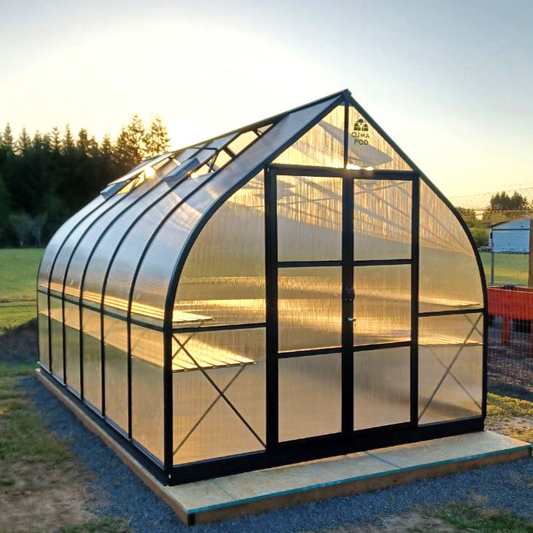
The first step is to draw a scaled outline of your vegetable garden. Measure your raised beds or in-ground beds and sketch them in proportion. If you use ClimaPod greenhouses, include your protected growing area as well.
Spend a couple of days observing sunlight in your garden. Note which areas receive the most sun and which remain partially shaded — this will guide your crop placement. Keep in mind that shadows change through spring and summer as trees leaf out and the sun’s angle shifts.
Step 2: Create Your Crop Wishlist
Before filling in the map, decide what you want to grow this season. Make a list of vegetables and herbs, then double-check that these crops are suitable for your USDA growing zone.
Review seed packets for planting dates, germination time, and days to harvest. Some crops have long growing seasons and need to be started early, while others mature quickly and are perfect for succession planting. Mark important dates on your garden map or calendar.

Step 3: Fill In Your Garden Map
Now it’s time to place your crops on the map. Use a pencil first — you will likely make changes. In a small backyard or greenhouse garden, it’s helpful to divide each bed into square-foot sections. This lets you calculate how many plants fit comfortably in each area.
For example, in one square meter (approximately 10.7 sq. ft.), you can plant about 5 tomato seedlings. See the full chart below for density recommendations.
Planting Density Chart (per 1 sq. meter)
| Crop | Seeds/Seedlings per sq. meter |
| Eggplant | 5–6 seedlings |
| Beans (bush) | 12–18 seeds |
| Peas | 40–60 seeds |
| Corn | 8–10 seeds |
| Zucchini | 1–2 seedlings |
| Cabbage | 2–4 seedlings |
| Cauliflower | 5–6 seedlings |
| Carrots | 100–150 seeds |
| Cucumbers | 10–20 seeds |
| Bell Peppers | 6–8 seedlings |
| Parsley | 80–120 seeds |
| Tomatoes | 4–6 seedlings |
| Radishes | 120–150 seeds |
| Daikon / Winter Radish | 40–70 seeds |
| Turnips | 40–50 seeds |
| Lettuce | 60–100 seeds |
| Beets | 40–60 seeds |
| Pumpkin | 1 seedling |
| Dill | 150–300 seeds |
| Pole Beans | 22–25 seeds |

How Much to Plant for a Family of Four
New gardeners often wonder how many vegetables they need to plant to feed a family. Below is a guideline based on an average family of four. Adjust the quantities to match your eating habits — for example, increase peppers if you use them in many dishes, or reduce onions if your family doesn’t eat much of them.
| Crop | Recommended Amount |
| Pole Beans | 3 trellises (one planting) |
| Bush Beans | 1.4 sq. meters (succession planting) |
| Broccoli | 5 plants |
| Brussels Sprouts | 5 plants |
| Peas | 1 sq. meter (spring & fall) |
| Leafy Greens | 1 sq. meter (spring & fall) |
| Head Cabbage | 5 plants |
| Corn | 1.4 sq. meters (mixed varieties) |
| Onions | 0.5 sq. meter |
| Chard | 5 plants |
| Carrots | 1 sq. meter |
| Cucumbers | 2 vines |
| Peppers | 3 plants |
| Tomatoes | 5 plants (mixed varieties) |
| Radishes | 0.5 sq. meter |
| Turnips | 1 sq. meter |
| Asparagus | 1 sq. meter (perennial) |
| Squash/Pumpkin | 2 vines |
| Lettuce | 1 sq. meter (succession planting) |
| Beets | 1 sq. meter |
| Cauliflower | 5 plants |
With your garden map ready, all that’s left is to start planting and bring your garden vision to life. A thoughtful layout makes every stage — planning, planting, and harvesting — far more enjoyable.