
Your October Gardening Checklist: What to Do Before the First Real Frost
October doesn't announce itself the same way everywhere. In Minnesota, gardeners are already watching for a hard freeze by the first week of the month. In coastal Southern California, October can still deliver 80-degree afternoons and tomatoes ripening on the vine. What every region shares is the same underlying shift: daylight is shrinking, soil is cooling, and plants are reading those signals whether or not the weather feels like it yet.
That's the real job of an October checklist. Not a rigid list of tasks tied to a date on the wall, but a set of decisions tied to what your specific plants and soil are actually doing. Get the timing right this month, and you'll walk into spring with healthier soil, fewer pest carryovers, and garlic already six inches tall. Get it wrong, and you'll spend March undoing what October left behind.
Watch Your First Frost Date, Not the Calendar
Before anything else on this list, figure out your average first frost date. Every task that follows hinges on it, and it varies wildly across the country. Gardeners in Zone 3 (parts of Minnesota, Maine, and the Upper Midwest) might see frost in mid-September. Zone 8 and 9 growers in the Gulf Coast, Florida, or Southern California may not see a frost until December, if at all.
A quick way to find yours: search your city name plus "average first frost date," which pulls from NOAA climate normals. That single number should shape when you pull tender crops, when you plant garlic, and when you start hardening off anything moving into a greenhouse.
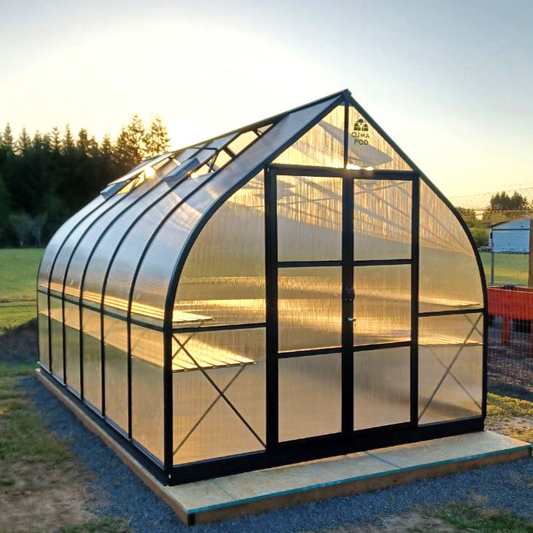
If you garden in a greenhouse, you have more flexibility here than in-ground growers do. A polycarbonate or glass structure can push your effective growing season several weeks past the outdoor frost date, which matters most for the next task on this list.
Bring In the Last of Your Harvest
October is decision-making month for anything still producing. Tomatoes, peppers, and squash are all frost-sensitive, meaning a single hard freeze (typically defined as 28°F or below) will collapse the plant tissue and end the season overnight. A light frost, closer to 32°F, may only damage exposed leaves and fruit while sparing the plant for another week or two.
A few crop-specific notes worth knowing:
- Green tomatoes will ripen indoors if picked before frost. Wrap them individually in newspaper and store in a cool, dark spot, checking weekly for ripe fruit.
- Winter squash and pumpkins need their skin to fully harden before storage. Press a fingernail into the rind; if it doesn't dent, it's ready. Cure them in a warm, dry spot for 7 to 10 days before moving to cold storage.
- Root vegetables like carrots and beets actually improve in flavor after a light frost, since cold triggers the plant to convert starches into sugars. There's no rush to pull these until closer to a hard freeze.
- Herbs such as basil turn to mush at the first frost, so harvest and freeze or dry what remains well ahead of time.
Don't treat this as an all-or-nothing sweep. Frost-sensitive crops come in first; frost-tolerant ones like kale, spinach, and those root vegetables can stay in the ground for weeks longer, some even improving with the cold.
Protect Tender Plants Before the Cold Nights Arrive
For plants you're not ready to give up on yet, whether that's a late pepper crop, dahlias still blooming, or young perennials that haven't established a strong root system, temporary protection can buy real time.
Row cover (a lightweight, spun-polyester fabric that traps heat without blocking light or water) is the simplest option for in-ground beds. Draped loosely over hoops or stakes, it typically buys 4 to 8 degrees of frost protection, enough to get through a light frost while extending harvest by a few weeks. Old bedsheets work in a pinch, though they don't insulate as well and can crush foliage if they touch wet leaves overnight.
Container plants have an advantage here: they can simply be moved. Bring tender potted plants, tropicals, and anything you're overwintering indoors into a garage, sunroom, or greenhouse before the first frost, not after. Roots in containers are more exposed to cold than roots in the ground, since there's no surrounding soil mass to buffer the temperature swing.

Clean Up the Garden Without Overdoing It
Fall cleanup has a reputation as a tidiness task, but it's really a disease and pest management task. Diseased plant material, especially anything with powdery mildew, blight, or fungal leaf spot, should come out of the garden entirely rather than going into the compost pile, since home compost piles rarely get hot enough to kill off those pathogens.
That said, "clean up everything" is where a lot of gardeners overcorrect.
A more targeted approach: remove anything diseased or that's clearly going to collapse into a slimy mat (most squash and cucumber vines qualify), and leave perennial stems and seed heads standing where they're healthy. Coneflowers, black-eyed Susans, and ornamental grasses all provide winter interest and food for birds, and can be cut back in early spring instead.
Plant Garlic, Bulbs, and Cover Crops
October isn't just a wind-down month. For a few specific crops, it's the only planting window that works.
Garlic needs a cold period to form proper bulbs, a process called vernalization, and fall planting gives it that chill naturally over winter while letting roots establish before the ground freezes solid. Plant individual cloves, pointed end up, about 2 inches deep and 6 inches apart, roughly 3 to 6 weeks before your ground typically freezes. In most of the country, that lands somewhere in October. Mulch heavily with straw once temperatures drop consistently below 40°F.

Spring-flowering bulbs, tulips, daffodils, crocuses, and hyacinths, also go in the ground now, since they need a sustained cold period before they'll bloom. Plant at a depth roughly three times the bulb's height, pointed end up, in a spot with good drainage. Standing water around bulbs over winter is one of the more common causes of rot.
Cover crops like winter rye, crimson clover, or hairy vetch are worth considering for any beds going empty for the season. Rather than leaving soil bare and exposed to erosion and nutrient leaching over winter, a cover crop holds the soil structure together, suppresses weeds, and in the case of clover and vetch, actually adds nitrogen back into the soil through a partnership with soil bacteria. Most cover crops need 4 to 6 weeks of growth before hard frost to establish well, so late September through mid-October is typically the last realistic window in colder zones.
Adjust Watering as Growth Slows Down
As days shorten and temperatures drop, most plants slow their water uptake considerably, even while they're still actively growing roots underground. Continuing a summer watering schedule into October is one of the more common ways gardeners end up with root rot and fungal problems just as the season winds down.
Watch the plants and the soil rather than the calendar. Reduce frequency, but don't cut water off entirely, especially for anything newly planted this fall (garlic, bulbs, cover crops, or new perennials), which still needs consistent moisture to establish roots before winter. A good general rule: water deeply but less often, letting the top inch or two of soil dry between waterings.
For greenhouse growers, this shift matters even more, since covered structures trap humidity and reduce natural evaporation compared to open-air beds.
Get Your Greenhouse or Cold Frame Ready for the Shift
If you're growing in a greenhouse, October is the month to reset it for cooler-season use rather than treating it as an extension of summer. A few changes make the difference between a productive fall structure and one that turns into a mold problem by November.
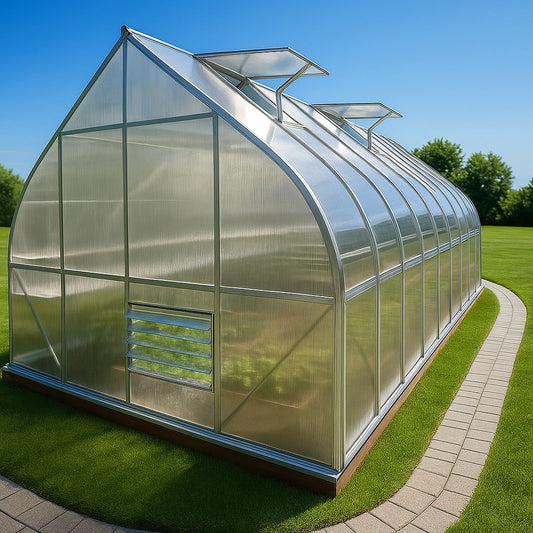
Ventilation first. Summer airflow needs (keeping things cool) flip into fall airflow needs (managing humidity). Condensation builds fast on cooler nights when warm, moist daytime air meets cold glazing after sunset, and that trapped moisture is exactly what fungal diseases like botrytis need to take hold. Crack roof vents or louvers for a portion of the day even as outdoor temperatures drop, and consider a small oscillating fan inside larger structures to keep air moving.

Check your glazing and seals before you're depending on them for frost protection. Polycarbonate panels can develop small cracks over a season of expansion and contraction; even a quarter-inch gap lets in more cold air than it looks like it should. Weatherstripping around doors and vents is worth a fall inspection too.
Cold frames (essentially miniature, low-profile greenhouses, often just a box with a hinged clear lid) are worth setting up this month for anything you want to keep growing into late fall: lettuce, spinach, and other cool-season greens do well under one, often producing weeks or even months past when an unprotected bed would have stopped.
Clean and Store Your Tools Properly
This one gets skipped more than any other item on the list, and it's cheap insurance against both rust and disease spread.
Wipe down pruners, loppers, and shovels to remove soil and plant residue, then dry them completely before storing. Soil left on metal tools holds moisture against the surface, which is the main driver of rust over a winter in storage. For pruning tools especially, a quick wipe with rubbing alcohol between uses through the growing season, and again before winter storage, helps prevent spreading fungal or bacterial disease from one plant to the next.
A light coat of oil on metal blades (mineral oil or even a used cloth with a bit of vegetable oil works) prevents rust over the winter months. Wooden handles benefit from a wipe with linseed oil once a year to keep them from drying out and cracking.

Drain and store hoses before a freeze cracks them from the inside, and if you have an irrigation system, blow out the lines or shut off and drain the water supply per the manufacturer's instructions.
What October Sets Up for Next Spring
None of this month's work shows results right away, which is part of why it's easy to skip. Garlic won't push up until spring. Cover crops look like nothing more than a patch of green fuzz until you turn them under in April. A greenhouse with proper fall ventilation just looks like a greenhouse.
But the gardeners who consistently get ahead of the season aren't doing anything mysterious in spring. They're mostly just not undoing damage from a fall that got skipped. Soil that had a cover crop over winter needs less amending. Beds that kept some standing perennial growth have more beneficial insects already active when pest pressure starts. A greenhouse with sealed glazing and clean vents doesn't need repairs before it can be used.
Pick two or three tasks from this list that fit your specific setup and your specific frost date, and you'll feel the difference by the time seed-starting season rolls around again.