
Is a Heavy-Duty Greenhouse Worth It? What Serious Growers Should Weigh Before Upgrading
A grower in Nebraska loses a hoop house to a March windstorm. A grower in the Pacific Northwest watches a roof panel sag under three feet of wet snow that fell in a single night. Neither one set out to buy the wrong greenhouse. They just didn't think about wind and snow load until the structure was already on the ground, and by then the lesson was expensive.
"Heavy-duty" gets thrown around a lot in greenhouse marketing, often attached to anything with a metal frame instead of PVC pipe. That's not a useless distinction, but it's an incomplete one. What actually determines whether a frame holds up isn't just its weight. It's the material, the profile design, the connection points, and how well the whole system resists the specific stresses your site sees year after year.
What "Heavy-Duty" Actually Means in a Greenhouse Frame
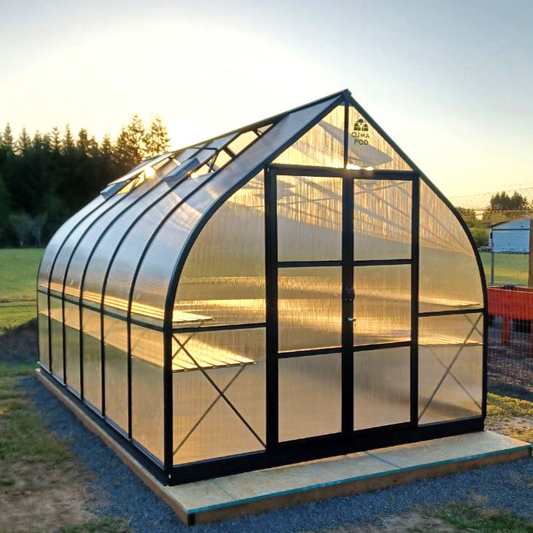
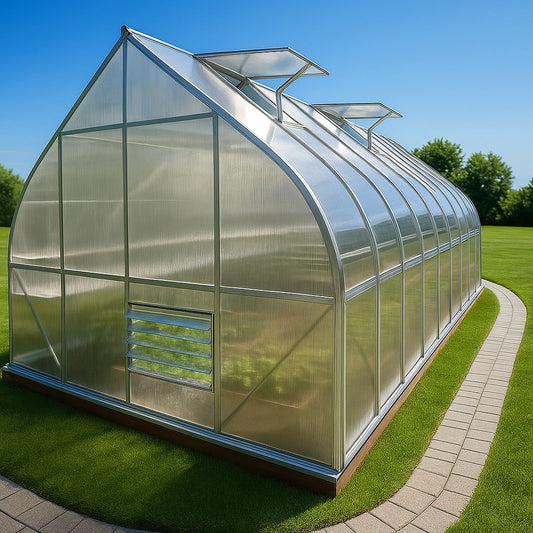
In practical terms, a heavy-duty greenhouse is rated to withstand higher structural loads than a standard hobby model. That rating comes down to a handful of engineering factors: frame material and profile thickness, connection hardware, foundation type, and the glazing (the covering material, whether polyethylene film, polycarbonate panels, or glass) attached to it.
A basic backyard hoop house typically uses thin-wall PVC tubing, spaced further apart, with a single layer of poly film stretched over it. It's inexpensive, quick to assemble, and perfectly functional in a mild climate with light wind exposure. A true heavy-duty structure steps up nearly every one of those specs: a stronger extruded frame profile, closer rafter spacing, reinforced ridge and eave connections, and almost always twin-wall polycarbonate glazing instead of film.
Among the metal frame options, extruded aluminum has become the material most manufacturers of serious, long-term greenhouses build around, and for reasons that show up over the life of the structure rather than on day one. Steel can be engineered to comparable strength, but it's worth naming the trade-off plainly: uncoated or poorly galvanized steel corrodes at cut edges and joints over time, and keeping it in good shape means regular inspection, touch-up coating, and eventual hardware replacement. That ongoing upkeep is enough of a factor that this guide focuses on aluminum framing as the heavy-duty benchmark, since it's the material most growers end up living with happily for decades.
Snow load capacity matters more than most first-time buyers expect. It's measured in pounds per square foot of roof surface, and it varies enormously by region. A greenhouse rated for 20 pounds per square foot might handle a light dusting just fine and then struggle under the wet, heavy snow common in the Upper Midwest or New England, where a single storm can deposit snow that weighs two to three times more per inch than the powder that falls in drier climates.

Where Heavy-Duty Construction Earns Its Keep
The clearest argument for heavy-duty construction shows up after a structure survives a season it wasn't built for. Growers who've watched a lightweight hoop house fold under wind or collapse under snow tend not to make the same purchase twice.
Three situations make the case most strongly:
- Year-round use in a demanding climate. If you're heating through winter and relying on the structure to protect a full crop cycle rather than just extending a shoulder season by a few weeks, the frame needs to hold up under sustained stress, not just survive an occasional storm.
- High-value or long-term crops. A backyard tomato crop lost to a collapsed greenhouse is disappointing. A citrus tree, a fig, or perennial cut-flower stock that took years to establish is a different kind of loss. The more time and money tied up in what's growing inside, the more the structure protecting it matters.
- Exposed sites with no windbreak. Open farmland, hilltop lots, and coastal properties see sustained wind speeds that a suburban backyard, sheltered by fences and neighboring houses, rarely experiences. Site exposure changes the math even within the same USDA hardiness zone.
An aluminum frame holds up well in exactly these long-haul scenarios, since it isn't racing against corrosion the way an unprotected steel frame is. A structure that's expected to sit through fifteen or twenty New England winters, or bake through Southwest summers, benefits from a frame material that doesn't need maintenance to keep performing at its rated strength.
What You're Actually Paying For
The price jump between a standard and heavy-duty greenhouse isn't just thicker metal. Several factors stack together, and it helps to know what you're actually buying before comparing quotes.
Frame material accounts for a lot of it. A well-engineered aluminum frame, built with a heavier extrusion profile and closer structural spacing, costs more upfront than thin PVC tubing. Glazing is the second major factor: twin-wall or triple-wall polycarbonate panels run considerably more than single-layer poly film, though they also insulate better and last far longer without needing to be replaced.
Beyond materials, heavy-duty structures typically require a more substantial foundation, whether that's a poured concrete perimeter, ground anchors driven deeper into the soil, or a full concrete slab. That foundation work is often the part buyers underestimate, since it rarely shows up in the sticker price of the kit itself.
When a Standard Greenhouse Is Still the Right Call
Plenty of growers don't need to spend the extra money, and it's worth saying that plainly. If your greenhouse is mainly extending spring seedling starts by a few weeks, protecting tender herbs through a mild fall, or giving you a warm space to start transplants before the last frost, a standard poly-film hoop house does that job well. It's cheaper, faster to put up, and easier to replace if conditions change or you decide to relocate it.
Standard structures also make sense in genuinely sheltered locations: a backyard bordered by a fence line and mature trees, a suburban lot with low average wind speeds, or a region with light, dry snowfall that rarely accumulates in significant depth on a roof.
The honest version of this advice is that heavy-duty construction solves a specific problem: structural failure under load. If that isn't a realistic risk on your site, you're paying for capacity you'll never use, whatever frame material it's built from.
Climate and Site Factors That Tip the Decision
A handful of regional patterns show up consistently enough to be worth naming directly.
Growers in the Upper Midwest, the Northeast, and parts of the Rocky Mountain West deal with heavy, wet snow that accumulates fast and stresses roof panels more than the same depth of dry, powdery snow would in a colder but drier climate. Gulf Coast and coastal growers, by contrast, face less snow load but much higher wind exposure and humidity, particularly during hurricane season, when sustained winds and gusts can exceed what a standard hoop house frame is rated to handle. Growers in the Southwest and inland California often deal with intense summer heat rather than structural winter loads, which shifts the priority toward ventilation and shading rather than frame strength.
Humid coastal air is another quiet factor worth naming. It's the kind of environment where an unprotected steel frame corrodes fastest, and where a frame material that simply doesn't rust saves a grower from a maintenance cycle they didn't sign up for.

Common Mistakes Growers Make When Comparing Options
A few patterns come up again and again when growers are shopping between standard and heavy-duty models.
- Comparing base prices without comparing rated wind and snow loads, which makes a cheaper structure look like a better deal when it's actually built to a lower standard.
- Assuming a bigger greenhouse automatically needs heavier construction. Size and structural rating are related but separate specifications; a small, poorly rated structure can fail just as easily as a large one.
- Skipping the foundation budget entirely, then being surprised when a proper anchor system adds a meaningful percentage to the total project cost.
- Focusing only on the upfront price of the frame and overlooking long-term upkeep, particularly with frame materials that require repainting, re-coating, or corrosion checks over the years.
Foundation, Permits, and the Costs Nobody Mentions Upfront
Heavier structures need more than a heavier price tag on the kit itself. Most manufacturers of true heavy-duty greenhouses recommend or require a permanent foundation, whether that's a poured concrete footing around the perimeter, a full slab, or deep ground anchors rated for the specific wind zone. That work often needs to be hired out, and it can add a substantial amount to the total project cost beyond the structure alone.
Depending on your municipality, a larger or permanent greenhouse may also require a building permit, which can involve site plans, setback requirements from property lines, and sometimes an inspection. This varies widely by county and state, so it's worth a phone call to the local building department before ordering anything, not after.

Getting the Most Out of a Heavy-Duty Structure
If a heavy-duty greenhouse genuinely fits your climate and growing plans, a few practices help it actually deliver on that investment.
Ventilation matters more, not less, in a tightly sealed heavy-duty structure. Twin-wall polycarbonate insulates well, which is great in winter and a real liability in summer if the structure can't vent excess heat. Roof vents, side vents, or an exhaust fan system become less optional as the covering material gets more airtight.
Routine inspection still matters, even with a low-maintenance aluminum frame. Check bolted connections, ground anchors, and foundation points at least once a year, ideally before winter in cold climates and before hurricane season in coastal ones. Hardware loosens gradually over years of thermal expansion and contraction, regardless of what the frame itself is made from.
Finally, match the covering material to the frame's actual rating. A structure engineered for high snow load performs at its designed capacity with the glazing it was built for. Swapping in a lighter film to save money on a recover undercuts the very rating that justified the heavier frame in the first place, and it's one of the few places where the frame material stops being the deciding factor in how well the whole system holds up.
Making the Call
The decision comes down to a short list of honest questions: How exposed is your actual site to wind and heavy snow? Are you growing through winter, or just extending shoulder seasons? What's actually at stake if the structure fails during a bad storm, a few seedling trays or years of established perennial stock? And how much upkeep are you actually willing to do over the next fifteen or twenty years?
For growers in exposed, high-wind, high-snow, or humid coastal regions running a structure year-round with real crops on the line, a heavy-duty aluminum-and-polycarbonate build is less an upgrade than a form of insurance, one that keeps performing at its rated strength without asking for repainting or corrosion repairs along the way. For a backyard grower extending a few weeks of spring and fall in a sheltered yard, a standard structure, properly anchored and maintained, will likely do the job for years without ever being tested by the conditions heavy-duty construction is built for.
Either way, the specs that matter are the ones you can actually check: rated wind speed, rated snow load in pounds per square foot, foundation requirements, glazing thickness, and how the frame material is going to hold up long after the first season's excitement wears off.