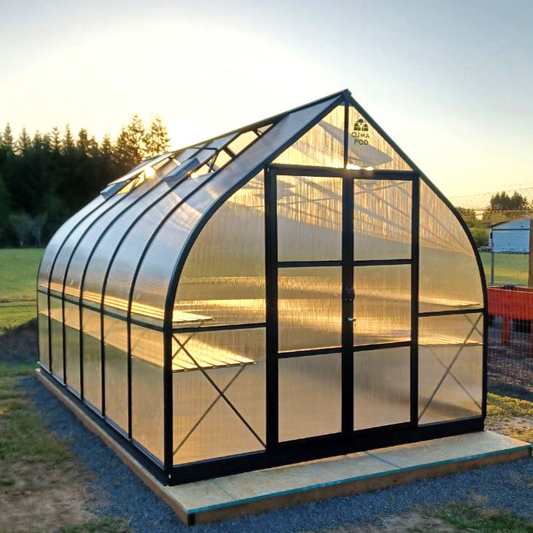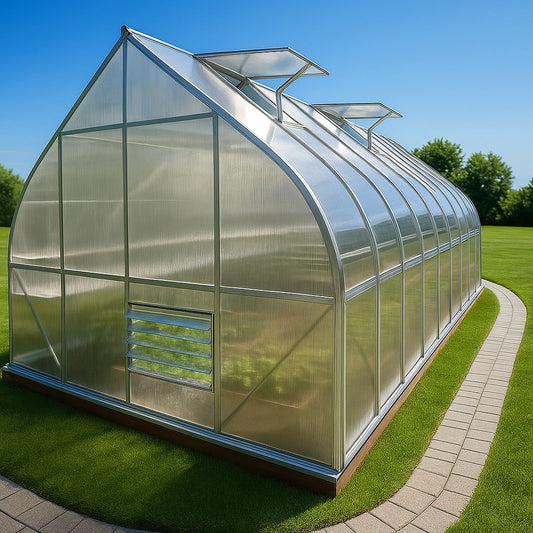

Why Ventilation Matters More Than Temperature
Short Answer
When greenhouse plants struggle on a warm day, gardeners often look first at the thermometer. But temperature alone does not tell you what plants are experiencing. Without adequate ventilation, a greenhouse can become humid, stagnant, and stressful even when the temperature seems acceptable.
Good ventilation moves hot, moisture-laden air out and replaces it with fresher air. That helps moderate temperature, reduce excess humidity, strengthen plant growth, and make conditions less favorable for many common greenhouse problems.
Why It Happens
Plants do not experience temperature in isolation. They are constantly exchanging water vapor with the surrounding air through transpiration, the natural process by which plants release moisture through tiny openings in their leaves.
In a closed greenhouse, that moisture can accumulate quickly. After watering, on humid days, or when a dense canopy is actively growing, the air may become saturated even before the temperature reaches an obviously dangerous level.
This is where ventilation becomes important. Air movement helps carry excess moisture away from leaves and growing surfaces while also removing heat that builds up from sunlight. It can make a greenhouse with the same measured temperature feel substantially different to the plants.
One common mistake is to wait until the greenhouse feels extremely hot before opening vents or doors. By then, the growing environment may already have spent hours with high humidity and poor air exchange.
Humidity is particularly important around dense foliage. When moist air remains trapped among leaves, evaporation slows and leaves may stay damp longer after watering or overnight condensation. Those conditions can increase the likelihood of fungal and bacterial problems, especially where foliage is crowded and airflow is poor.
What To Do

Think of ventilation as part of your daily greenhouse routine rather than an emergency response to high temperatures.
- Vent early on sunny mornings. If the forecast calls for a warm, bright day, begin exchanging air before the greenhouse becomes excessively hot.
- Create a path for air to move through. Opening vents or doors on opposite sides is generally more effective than creating one small opening.
- Use fans when natural ventilation is insufficient. Fans help move air through the plant canopy, but they do not replace the need to exhaust hot, humid air from the greenhouse.
- Reduce unnecessary moisture. Water at appropriate times, avoid constantly wetting foliage, and do not allow standing water to remain inside the growing area.
- Watch the plants, not just the thermometer. Wilting, excessive condensation, persistently damp foliage, or a greenhouse that feels heavy and stagnant can indicate that air exchange needs attention.
Climate makes a difference. In a hot, dry region, ventilation can help prevent excessive heat buildup but may also increase water loss. In a humid summer climate, exchanging air may be especially important for controlling moisture inside the greenhouse. During cool nights, however, leaving everything wide open can unnecessarily chill plants, so ventilation should be adjusted rather than treated as an always-open setting.
What To Watch For

A well-ventilated greenhouse should not necessarily feel cool. On a sunny afternoon, it may still become noticeably warm. The goal is to prevent heat and moisture from becoming trapped for long periods, not to maintain an artificially constant temperature.
Pay particular attention after watering, following several cloudy or rainy days, and during stretches of warm, humid weather. These are times when moisture can accumulate faster than it leaves the greenhouse.
Also watch for the opposite mistake: excessive ventilation without considering the weather. Strong airflow during very hot, dry conditions can increase plant water demand, while cold drafts can stress tender plants. Ventilation is a balancing act between heat, humidity, outside conditions, and the needs of the crop.
If plants are repeatedly wilting despite adequate soil moisture, developing persistent leaf wetness, showing increasing disease pressure, or growing weakly in a crowded canopy, do not assume temperature is the only issue. The air around the plants may be part of the problem.
The practical lesson is simple: a greenhouse is not just a container for warm air. It is a living growing environment in which temperature, humidity, moisture, and air movement constantly interact. Good ventilation helps keep those factors in balance, often making a bigger difference than chasing a perfect temperature reading.