
Polycarbonate Greenhouse Guide: 5 Common Mistakes and How to Avoid Them
A greenhouse is a long-term investment whether you’re a backyard gardener or a professional grower. Polycarbonate has become the material of choice across the United States thanks to its strength, insulation, and light transmission. However, not all polycarbonate greenhouses are built the same.
This guide explains the most common polycarbonate mistakes, how to avoid them, and how well-engineered greenhouse kits help ensure durability, efficiency, and years of reliable use.
1. Choosing the Right Polycarbonate Thickness
Polycarbonate thickness directly affects a greenhouse’s strength, insulation, and lifespan. Across the U.S., climate conditions vary dramatically from mild coastal zones to heavy snow regions, which is why selecting the appropriate thickness is essential.
- 4 mm polycarbonate suitable for mild climates and seasonal growing;
- 6 mm polycarbonate a balanced option for most regions;
- 10 mm polycarbonate designed for extreme weather and year-round use.
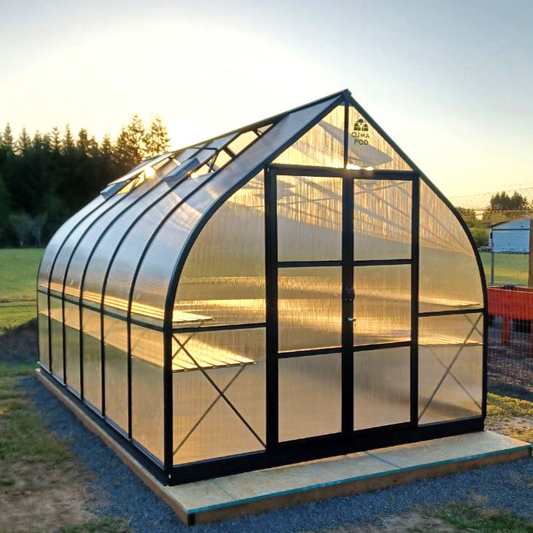
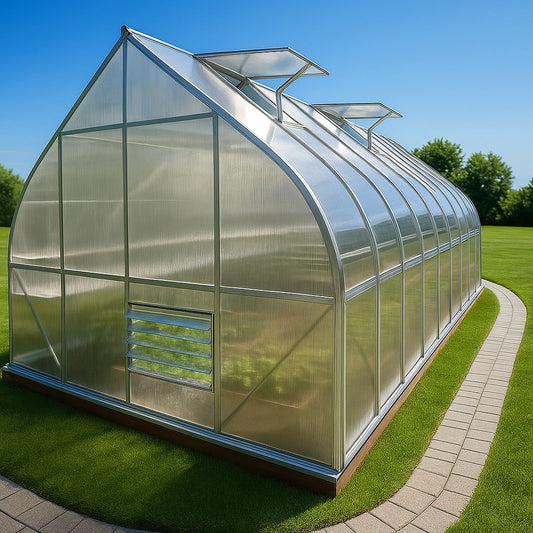
Thin panels may reduce upfront cost, but they are more vulnerable to wind loads, hail impact, and heat loss. That’s why ClimaPod offers multiple configurations: Passion 4mm for lighter use, Virtue and Spirit 6mm for all-around reliability, and Titan 10/12 with 10mm panels for maximum strength in demanding environments.
2. Why Material Quality Matters More Than Price

Thickness alone does not define performance. The internal structure and overall material quality determine how well polycarbonate resists deformation, cracking, and long-term fatigue.
Low-quality panels often feel flexible and can dent easily under light pressure. While these products may appear attractive due to lower cost, they typically degrade faster and require earlier replacement.
Tip for experienced growers:
If a panel visibly compresses when squeezed by hand, it’s not designed for structural longevity.
ClimaPod greenhouse kits use polycarbonate selected specifically for structural greenhouse applications, ensuring consistent performance across temperature swings and seasonal loads.
3. UV Protection: The Invisible Shield
Sunlight is essential for plant growth but ultraviolet radiation is one of the main causes of polycarbonate degradation. Without proper UV protection, panels can yellow, lose transparency, and develop micro-cracks over time.
All ClimaPod polycarbonate panels are UV-protected on the exterior side, ensuring long-term clarity and structural stability. During installation, it is critical that the UV-protected side faces outward.
Incorrect orientation is one of the most common reasons greenhouses fail prematurely even when high-quality materials are used.
4. Open vs Sealed Panel Edges
Another overlooked issue is how the edges of polycarbonate panels are treated. Open or poorly sealed edges allow moisture, dust, algae, and mold to accumulate inside the cells.
Over time, this leads to:
- Reduced light transmission;
- Condensation buildup;
- Internal freezing damage;
- Unpleasant visual appearance.
Proper greenhouse systems use sealed edges, protective tapes, and structural profiles that prevent contamination while still allowing controlled condensation drainage.
5. Installation Matters More Than You Think

Even the best materials can fail if installed incorrectly. Common mistakes include incorrect panel orientation, insufficient support spacing, and rigid fastening that ignores thermal expansion.
Polycarbonate naturally expands and contracts with temperature changes. If panels are forced into fixed positions, stress builds up eventually leading to cracks or panel deformation.
Pro Tip:
Greenhouse panels should never be installed under tension. Controlled movement is a sign of proper engineering, not weakness.

The Correct Way to Mount Polycarbonate Panels

One of the most critical and often misunderstood aspects of greenhouse design is how polycarbonate panels are attached to the frame.
Many greenhouse designs rely on drilling holes directly through the panels and securing them with screws or washers. While common, this approach introduces several long-term risks:
- Permanent penetration of the panel surface;
- Stress concentration around fasteners;
- Water infiltration points;
- Restricted thermal movement.
ClimaPod greenhouses use a fundamentally different approach: polycarbonate panels are mounted into engineered aluminum profile channels, without drilling, screws, or penetrations.
This system allows panels to expand and contract naturally, maintains a clean exterior surface, and significantly extends the service life of the greenhouse.
You can explore a detailed technical comparison here: See Comparison ClimaPod with Others
Tips for Long-Term Performance
Whether you’re installing a new greenhouse or maintaining an existing one, these practices help maximize longevity:
- Clean panels using mild soap and soft cloths only;
- Avoid abrasive tools or harsh chemicals;
- Inspect seals and profiles annually;
- Ensure drainage paths remain unobstructed.
Proper design combined with simple maintenance routines ensures your greenhouse remains productive and visually clean for years.
A greenhouse should support your growing goals, not become a recurring repair project. Thoughtful engineering, correct material selection, and non-penetrating mounting systems are what separate temporary structures from truly long-lasting greenhouse solutions.