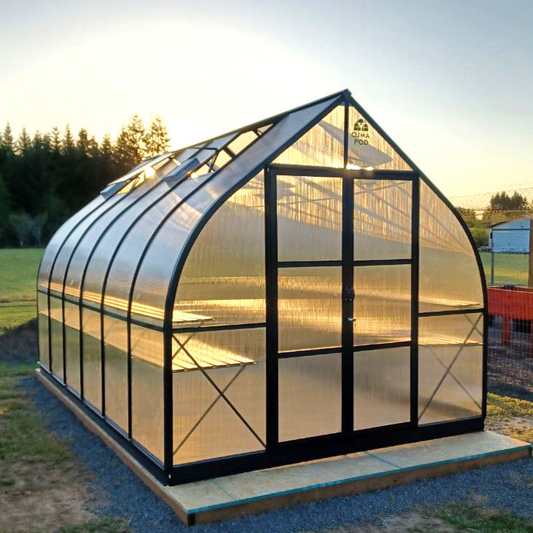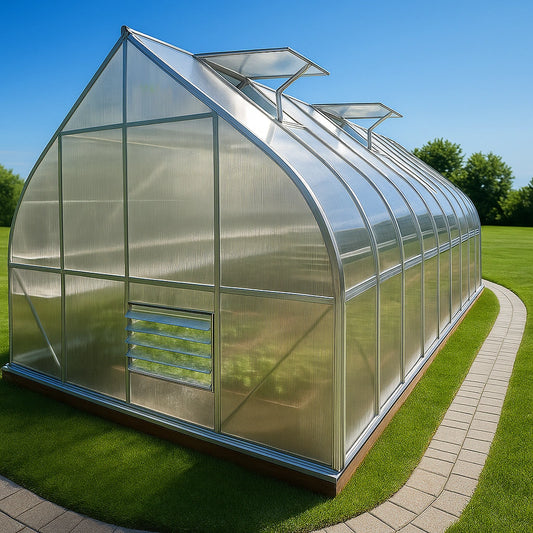

How to Prepare a Greenhouse for Winter: Your October Checklist
The first hard freeze rarely announces itself. One week you're picking tomatoes in a T-shirt, the next the forecast says 24°F on Thursday, and a greenhouse that wasn't ready turns into a cold, damp box full of struggling plants.
October is the right month for this work because the weather still cooperates. Panels can be washed without freezing, sealant cures, and you can test a heater on a chilly evening instead of a desperate one. The sections below follow the order we'd tackle things in: structure first, then air, then heat, then plants.
Decide What Winter Means for Your Greenhouse
Before you buy weatherstripping or a heater, settle on what you want the greenhouse to do from December through February. Most growers fall into one of three camps, and each one needs a very different level of effort.
- Frost protection only. You want the inside to stay above freezing, roughly 35 to 40°F at night, so hardy plants, overwintering containers, and tender perennials survive.
- Cool-season production. You want to harvest lettuce, spinach, kale, and similar crops through winter. Cool-season crops are plants that grow best in cool weather and tolerate light frost, so they need protection more than warmth.
- Warm-crop growing. You want tomatoes, peppers, citrus, or tropical plants to keep going. Tomatoes and peppers struggle when nights drop below the mid-50s, so this goal needs dependable heat.
The cost difference between these goals is large because heat loss scales with the gap between inside and outside temperature. Holding 55°F on a 10°F night takes far more energy than holding 38°F, and the gap widens quickly as the weather gets colder.
Clean the Glazing and Inspect the Structure
Start with the covering. Glazing is the clear material that lets light in, whether that's glass, polycarbonate panels, or film. Winter sun sits low and days are short, so a film of dust, pollen, and algae costs you light at exactly the moment you have the least to spare.
Wash panels with mild dish soap, lukewarm water, and a soft brush or sponge, then rinse. Skip abrasive pads and harsh solvents, which scratch the surface and give algae more places to grab. Polycarbonate manufacturers often have specific cleaning guidance, so check theirs before using anything stronger than soap.

While you're up there, inspect the frame like someone looking for trouble. Look for loose fasteners, cracked or slipped panels, sagging door hinges, and rust at anchor points. A rattling panel in October becomes a missing panel in a January windstorm.
Test every vent and door too. If you use automatic vent openers (the wax-filled cylinders that push a vent open as temperatures rise), confirm they still move freely and respond to heat. Sticky openers are one of the more common causes of overheated greenhouses on sunny winter days.
Clear Out the Old Season (Pests Hide Better Than You Think)
Pull spent summer crops and bag anything diseased for the trash. Compost piles that don't get hot enough won't kill many plant pathogens, so diseased tomato vines are better kept out of the bin.
Then deal with the places pests wait out the cold. Spider mites tuck into cracks in benches and frames, whiteflies and aphids stay on leftover plants, and fungus gnats breed in constantly damp potting mix. A warm, enclosed greenhouse with few natural predators gives small populations room to explode over winter.
Wash benches, trays, pots, and floors, then disinfect hard surfaces. A common choice is household bleach at roughly 1 part to 9 parts water, rinsed well and allowed to dry, but follow any product label you use and keep it away from plants. Bleach corrodes bare metal, so rinse those surfaces thoroughly. Hang yellow sticky traps at plant height now. They catch the first arrivals long before you'd notice them by eye.
Seal Drafts Without Smothering the Air
Drafts are the cheapest heat loss to fix. Replace worn door weatherstripping, close the gap along the threshold, and look for open seams where panels meet the base or each other. Use sealant and closure strips rated for outdoor use, and confirm they're compatible with your panel material, since some sealants cloud or weaken polycarbonate over time.
Here's where growers get tangled up, though. Once the leaks are fixed, the instinct is to keep everything shut all winter. That works against you, because cold, damp, motionless air is where botrytis thrives. Botrytis, also called gray mold, is a fuzzy gray fungus that attacks leaves, stems, and flowers, and it spreads fast when humidity stays high and the air doesn't move.
Two habits solve most of it. First, run a small horizontal airflow fan (an HAF fan, a low-power circulation fan that keeps air gently moving instead of blowing on plants). Second, crack a vent for an hour or two on sunny days, even when it's cold outside, to exchange the humid air. Close it again before the sun drops so the greenhouse can store some of the day's warmth.

You'll also see condensation, the droplets that form when warm, moist air touches a cold surface. Some dripping on cold nights is normal. Heavy, constant dripping onto plants is a sign to improve airflow or water less, and a roof pitch that sheds droplets down the walls instead of onto the bench helps too.
Choose and Test Your Heat Before You Need It
Heating options come down to a handful of practical choices, each with trade-offs.
- Electric heaters are the easiest to control and the safest in small spaces. They need an adequate circuit, an outdoor-rated cord, and a GFCI outlet (a ground fault circuit interrupter, which cuts power if electricity leaks, a real risk in a damp building).
- Vented propane or natural gas heaters can heat larger spaces more cheaply, but they must exhaust outside. Unvented burners release moisture and combustion gases, which harm plants and put people at risk of carbon monoxide poisoning.
- Passive measures reduce how much heat you need. Thermal mass (material that absorbs heat by day and releases it at night, such as dark-painted water barrels) softens temperature swings. Horticultural bubble film on the north wall and a second layer of cloth over plants help too. They buffer cold snaps but won't replace a heater in a hard freeze.
Whichever you choose, run it now. Set the thermostat, leave it on through a cool night, and check the actual temperature with a separate thermometer. Built-in thermostats are often off by several degrees, and you'd rather learn that in October.

Think about failure, too. Heaters fail, breakers trip, and power goes out during the same storms that bring the lowest temperatures.
Adjust Watering and Plan Around Shorter Days (Plants Drink Less Than You Think)
Plants slow down as light fades and temperatures drop, and they use much less water. Watering on a summer schedule is one of the fastest ways to rot roots and invite fungus gnats in winter. Check the soil by finger before each watering, and water in the morning so foliage dries before night. Water at the base or by drip line rather than overhead.
Water temperature matters more than people expect. Ice-cold water straight from a hose chills the root zone, so keep a barrel inside the greenhouse and let it come to room temperature. It doubles as thermal mass.
Before the first hard freeze, disconnect and drain hoses, shut off and drain exterior supply lines, and empty drip lines if they could freeze. Cracked fittings are a miserable surprise to find in spring.
Light is the other half of the story. Photoperiod is the number of daylight hours, and below roughly 10 hours most leafy crops grow very slowly. Since your plants will do little growing from December through January, the size they reach by early winter is close to the size you harvest from.
What to Plant or Keep Going in October
For most home growers, winter greenhouse success comes from leaning into plants that like the cold. Lettuce, spinach, kale, arugula, radishes, claytonia (also called miner's lettuce), and mâche all handle low temperatures well, and many hardy greens come through nights in the 20s when you add a cover layer inside the greenhouse. Look for varieties sold for cold weather, such as Winter Density lettuce or Winterbor kale.
That inner cover layer is called row cover, a lightweight fabric draped over hoops or directly on plants. It adds a few degrees of protection right where the plants are, which is often more effective than trying to warm the entire greenhouse by the same amount.

Summer crops need an honest decision. Tomatoes and peppers can finish ripening in an unheated greenhouse for a few more weeks, but as nights cool and days shorten, fruit set falls off and disease pressure rises. Unless you plan to heat, enjoy the last harvest, then pull the plants and use the space for greens.
How Climate Changes the Checklist (Zone 4 and Zone 9 Don't Share a To-Do List)
USDA hardiness zones are map-based ranges of average coldest winter temperatures, and they're a useful shorthand for what you're up against. Here's how the priorities shift across a few common U.S. regions.
- Pacific Northwest (roughly zones 8 and 9 west of the Cascades): Winters are mild but long, gray, and wet. Humidity, condensation, and botrytis are the main challenges, and light protection often covers the cold.
- Upper Midwest and Northeast (roughly zones 3 to 6): Deep cold, snow load, and heating costs dominate. Many growers here treat an unheated greenhouse as a place for hardy greens and storing containers, and heat only for specific goals.
- Southeast and Gulf Coast (roughly zones 8 to 10): Winter days can turn warm and bright, so overheating is a bigger risk than cold most of the time. Keep frost cloth and backup heat ready for the occasional hard freeze.
- Southwest: Big swings between freezing nights and 70°F afternoons are the norm. Dependable vent automation and thermal mass do more here than a large heater.
Your first average frost date is worth looking up too, since it sets the clock for everything above. Your local extension office usually publishes it for your area.
Prepare for Snow, Wind, and Power Outages
If you get snow, know your structure's rated snow load (the weight of snow the roof can safely carry, listed by the manufacturer) and don't assume a mild-looking storm will stay mild. Clear heavy snow from the roof with a soft push broom, working from the outside and avoiding metal tools that scratch panels.
For wind, check that doors latch firmly and vents close all the way. For outages, keep a few extra layers of frost cloth, a battery-powered thermometer alarm, and some filled water jugs inside as extra thermal mass. If you use a fuel-burning heater or generator, never run either one inside a closed greenhouse. Install a carbon monoxide detector wherever combustion happens nearby.
A Sensible Order for the Last Weeks of October
If the list feels long, take it in this order. Each step sets up the next one.
- Decide your minimum night temperature and which crops you'll grow.
- Wash the glazing and inspect the frame, fasteners, door, and vents.
- Clear spent crops, disinfect surfaces, and hang sticky traps.
- Seal drafts and set up an airflow fan.
- Install and test your heater, thermostat, and thermometers.
- Drain hoses and exterior lines, and cut back on watering.
- Sow or transplant cool-season crops and set up row covers.
- Stage frost cloth, a spare thermostat, and your outage plan.
Then keep a small notebook by the door. Jot down the overnight lows, what survived, and what you'd change. By next October you'll have a checklist written for your own greenhouse, which beats any general one.